
Abatement Technologies Air Duct Cleaning in Pembroke Pines: A Homeowner’s Guide
When a duct cleaning company pulls up and the vacuum looks like an oversized shop-vac, it usually is one. That matters because the machine doing the sucking is the single clearest signal of what kind of clean you’re actually getting. Abatement Technologies equipment is a different category of tool entirely: HEPA-rated filtration built to hold a duct system under continuous negative pressure, so loosened debris leaves the house instead of settling into the next room. In this guide we’ll explain what that gear actually does, when it’s genuinely necessary in a Pembroke Pines home, and how to ask the right questions before you book. If you’d rather not sort this out alone, call (855) 508-8964 for a free estimate.
What Is Abatement Technologies Equipment, and Why Does It Show Up in a Duct Job?
Abatement Technologies builds air filtration and negative air machines for controlled-environment work: asbestos abatement, mold remediation, hospital and industrial containment. The category exists because certain jobs can’t afford to let captured particles escape back into the space being cleaned. A HEPA-rated negative air machine does two things at once. It filters air at the HEPA standard, capturing particles down to 0.3 microns, and it keeps the work zone under pressure so that air flows toward the machine rather than out into the rest of the building.
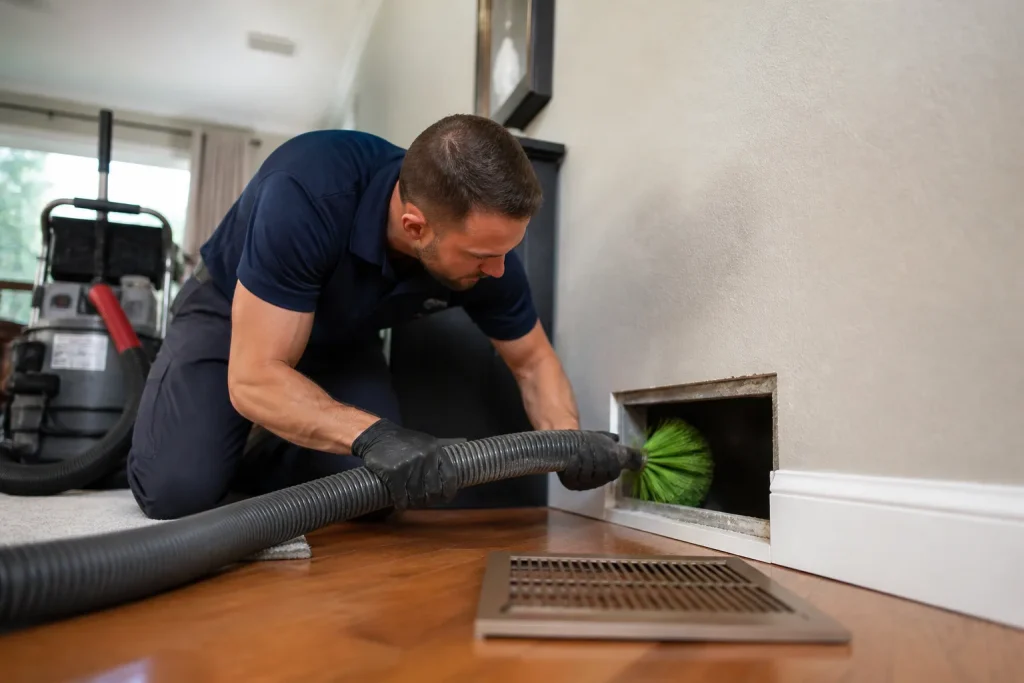
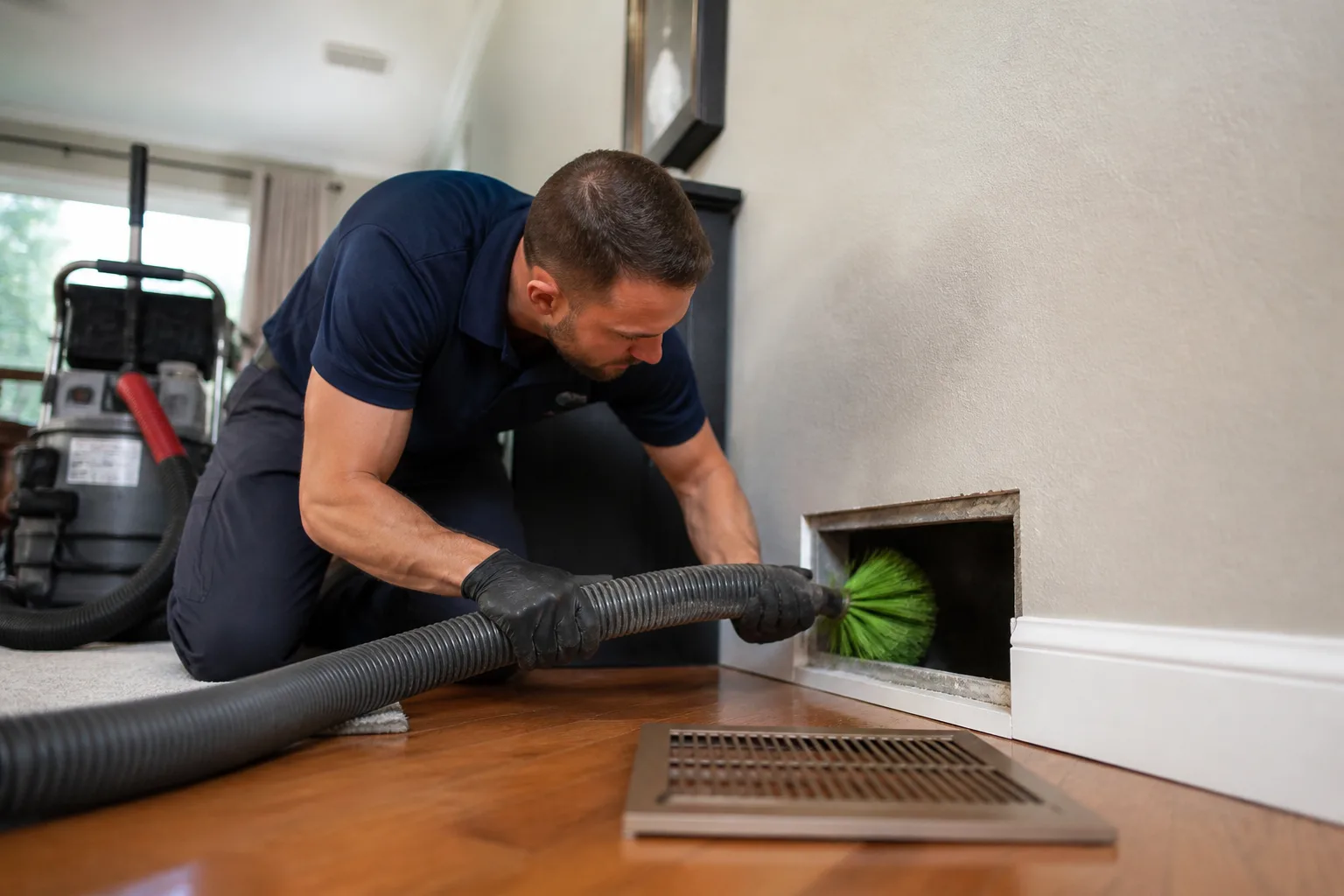
That second part is what makes the equipment useful for air duct cleaning. When a rotary brush loosens a decade of dust from a duct run, you don’t want it blowing out of a nearby return while the technician works. Negative pressure keeps that material moving in one direction: toward the HEPA vacuum and out of your living space. Most residential operators skip this step because their equipment can’t hold pressure across a whole system. The result is a clean-looking register and dust redistributed somewhere you can’t see.
For a homeowner, the practical takeaway is simple. Ask what vacuum the crew uses and whether it runs HEPA-rated filtration with source capture. If the answer is vague, that’s your answer.
How Does Negative Air Pressure Prevent Cross-Contamination Between Duct Runs?
Picture a Pembroke Pines two-story home with two or three separate zones. Each zone has its own supply and return trunk off the air handler. When a single vacuum is connected at one register and the technician brushes another, air can migrate between runs at the plenum, at duct joints, and through leaky connections. Whatever was loosened in one section can settle into another that was already clean.
- Containment at the source: The vacuum connects to the duct opening, and the machine holds the whole run under negative pressure while the brush works.
- Isolation between zones: Proper containment means each run is cleaned without its debris riding into the next zone.
- Capture, not exhaust: HEPA filtration stops the fine particles (the ones that stay suspended in air) from being discharged back into the room.
- Continuous pressure: The machine runs for the whole job, not just when the brush is spinning, so loosened material doesn’t resettle between passes.
This matters more in multi-story and multi-zone houses than in a single-story ranch, because there’s more ductwork, more joints, and more opportunity for debris to travel sideways. Our technicians have up to 15 years of experience and have worked in plenty of Pembroke Pines homes where the duct layout runs three different directions across two floors. That’s exactly the geometry where containment counts.
What Does HEPA Filtration Actually Capture That a Standard Vacuum Exhausts Back?
Standard shop-vacs and low-tier duct vacuums do pull material out of a duct. The problem is the exhaust. A typical vacuum filter captures the large debris and passes the fine particles right back into the room. Those fine particles are the portion that affects your indoor air, and it’s the portion you notice as dust settling on furniture days after a “clean” job.
Abatement Technologies negative air machines run true HEPA filtration, which is designed to trap particles as small as 0.3 microns. The visible dust, the dander, the mold spores that ride on house dust in a humid Pembroke Pines climate – most of that lands in the HEPA range. When we run Ashford Air Duct Cleaning jobs, the equipment is in place before a brush enters a single duct, so the filtration standard is set before the work begins. We pair Abatement Technologies negative air machines with Rotobrush rotary-brush systems and Nikro HEPA vacuums for the same reason: extraction at the source, not redistribution.
You don’t need to understand microns to evaluate this. Ask a simple question: “What filtration class is your vacuum, and does it run continuously during the job?” A qualified operator answers without hesitation.
How Do I Ask a Duct Cleaning Company About Their Vacuum Specs Without an Engineering Background?
You don’t need a technical vocabulary. You need four or five good questions, asked in this order, and enough patience to listen to the answer.
- “Do you use a HEPA-rated vacuum, and does it run in the duct while you’re brushing?” Yes means real filtration. “It’s a strong shop-vac” is also your answer.
- “How do you contain the debris in a multi-zone system?” They should describe negative pressure, sealed openings, or isolation of each run.
- “Do you use a rotary brush or just air?” Rotary brushes (Rotobrush is the standard) physically agitate the duct wall. Air-only “cleaning” is the equivalent of leaf-blowing a room and calling it swept.
- “Will I see before-and-after photos of my own ducts?” Documentation separates verifiable work from a coupon-driven visit.
- “Is this one price for the whole system, or per vent?” Per-vent pricing is the setup for a bigger invoice once a technician is in your hallway. Ask for one flat price per system, agreed before work starts.
There’s no hidden trick in these questions. A company using the right equipment will answer all five clearly. A company using a portable blower will start talking about how much experience they have and change the subject.
When Is Remediation-Grade Equipment Genuinely Necessary, and When Is It Overkill?
Honest answer: not every job needs Abatement Technologies gear and not every job needs the same intensity. Here’s how we think about it.
- Remediation-grade is the right call when there’s visible mold growth inside a duct or on the air handler, when a home has had water intrusion or a known moisture problem, when a heavy renovation just finished and drywall dust filled the system, or when a prior “clean” left the problem unresolved.
- Remediation-grade is still worth requesting when the home has a premium IAQ system (Honeywell or Aprilaire in-line filtration, for example) where the ductwork itself is part of the air-quality strategy.
- A standard maintenance clean may be enough when the ducts are well-sealed, airflow is even, there’s no odor, and the last cleaning was recent. In that case a thorough mechanical clean with proper containment still matters, but you don’t need the same level of equipment.
In our experience, the homes that need the most are the ones where someone skipped containment entirely the first time. Ask us and we’ll tell you honestly which category your system falls into.
How Does Pembroke Pines Humidity Affect What You Should Look For?
Pembroke Pines sits in a humid subtropical climate. That’s a real factor in ductwork because moisture supports the growth of mold and mildew on duct insulation and the interior of flex duct. If a cleaning only agitates that material and doesn’t capture it, you’ve stirred up exactly what you wanted removed. Negative pressure and HEPA filtration are what keep a humid-house clean from turning into a redistribution event.
Because much of Pembroke Pines was built out with tightly sealed, energy-conscious construction, humidity inside the duct system has fewer places to escape than in older homes. That’s a reason to check for breached ductwork, disconnected sections, or insulation that has sagged away from the duct wall. Cleaning without inspecting for those issues is a partial job. Our pembroke pines services include duct repair as a core service for exactly this reason: clean, repair, and protect.
Dryer ducts face the same humidity pressure. A clogged dryer vent is one of the leading causes of residential fires, and the humid climate doesn’t help. That’s why dryer vent cleaning is its own service, not an add-on.
Related Services in Pembroke Pines
If you’ve decided your ducts need attention, we handle the full arc: air duct cleaning, dryer vent cleaning, and air duct repair. One call resolves all three.
When to call a pro
Call a professional when airflow is uneven room to room, when there’s a musty odor at a register, when you can see visible dust buildup on the return grille, or when a prior cleaning left you with more questions than answers. Ductwork is a whole-system job. A shop-vac and a shop-vac operator are the same thing, and neither one is going to solve a system-level problem.
What happens when you call
- 1
A real person answersNo phone trees – you reach a local pro.
- 2
You get an upfront price rangeHonest numbers before anyone is dispatched.
- 3
A background-checked tech heads outLicensed & insured, dispatched right away.
- 4
You approve before work beginsNothing starts until you say go.
The Bottom Line
Abatement Technologies equipment is one of the clearest signals separating a real duct cleaning from a cosmetic one, because the tool category was built to solve exactly the problem that standard vacuums create. If you’re remembering a few key points, remember these:
- Negative air pressure keeps loosened debris moving toward the machine instead of into the next zone.
- HEPA-rated filtration captures the fine particles that a shop-vac exhausts back into the room.
- Ask about vacuum specs, containment, rotary brush, and one-price-per-system before you book.
- Remediation-grade is genuinely necessary in some homes and genuinely overkill in others. A good operator will tell you which.
If you’re in Pembroke Pines and need help, Ashford Air Duct Cleaning offers free estimates. Call (855) 508-8964. We answer 24/7. Fast dispatch from 7am to 7pm, Sunday through Friday. Before-and-after photos of your own ducts and one flat price agreed before work starts are part of every job.
Frequently Asked Questions
It means using Abatement Technologies negative air and HEPA filtration equipment during a duct cleaning job. The machine holds the duct system under continuous negative pressure so loosened debris flows toward the filter rather than into your rooms. It’s the same equipment class used in mold remediation and controlled-environment work, and rarely seen in residential duct cleaning. For a free estimate, call (855) 508-8964.
No. A shop-vac pulls material out of the duct opening, but its exhaust filter typically passes fine particles back into the room. That’s why customers see dust return days after a cleaning. HEPA-rated filtration with source capture is the standard to ask for. Call (855) 508-8964 for a specific quote on your system.
You likely need it if there’s visible mold in the ducts, a musty odor at the registers, recent water intrusion, or a heavy renovation just finished. A well-sealed system with no odor, even airflow, and a recent cleaning usually does not. An honest operator will tell you which category you’re in. Call (855) 508-8964 for an assessment – estimates are free.
For most homes, every few years is reasonable if the ducts are sealed, airflow is even, and there’s no odor or recent renovation. Homes with pets, allergies, or heavy dust load may need it more often. The honest answer depends on your specific system, not a coupon schedule. Call (855) 508-8964 and we’ll talk through what makes sense for your home.
Written by the team at Ashford Air Duct Cleaning.
Need Air Duct Cleaning Help?
Call Ashford Air Duct Cleaning - licensed & insured, with free written estimates in Pembroke Pines.
(855) 508-8964