
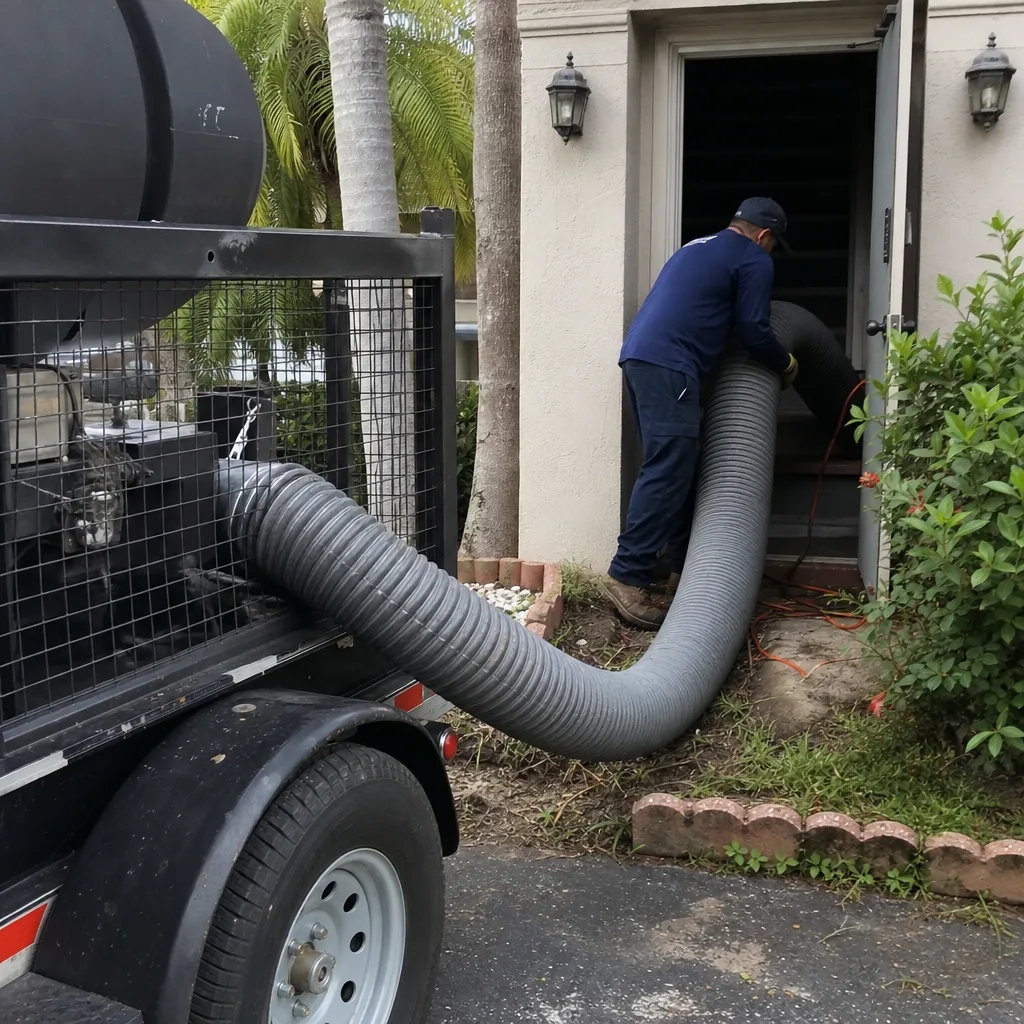
Last updated November 15, 2026
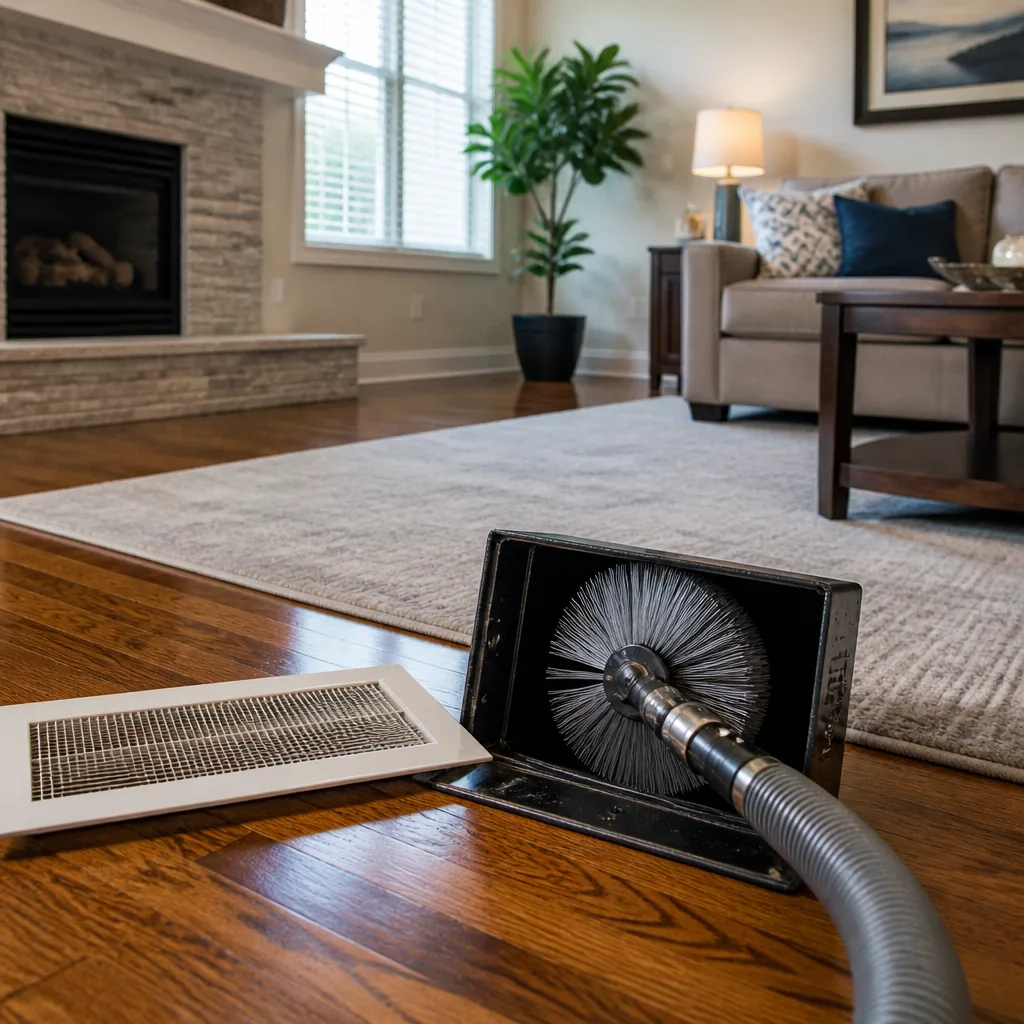 Whole-home duct cleaning
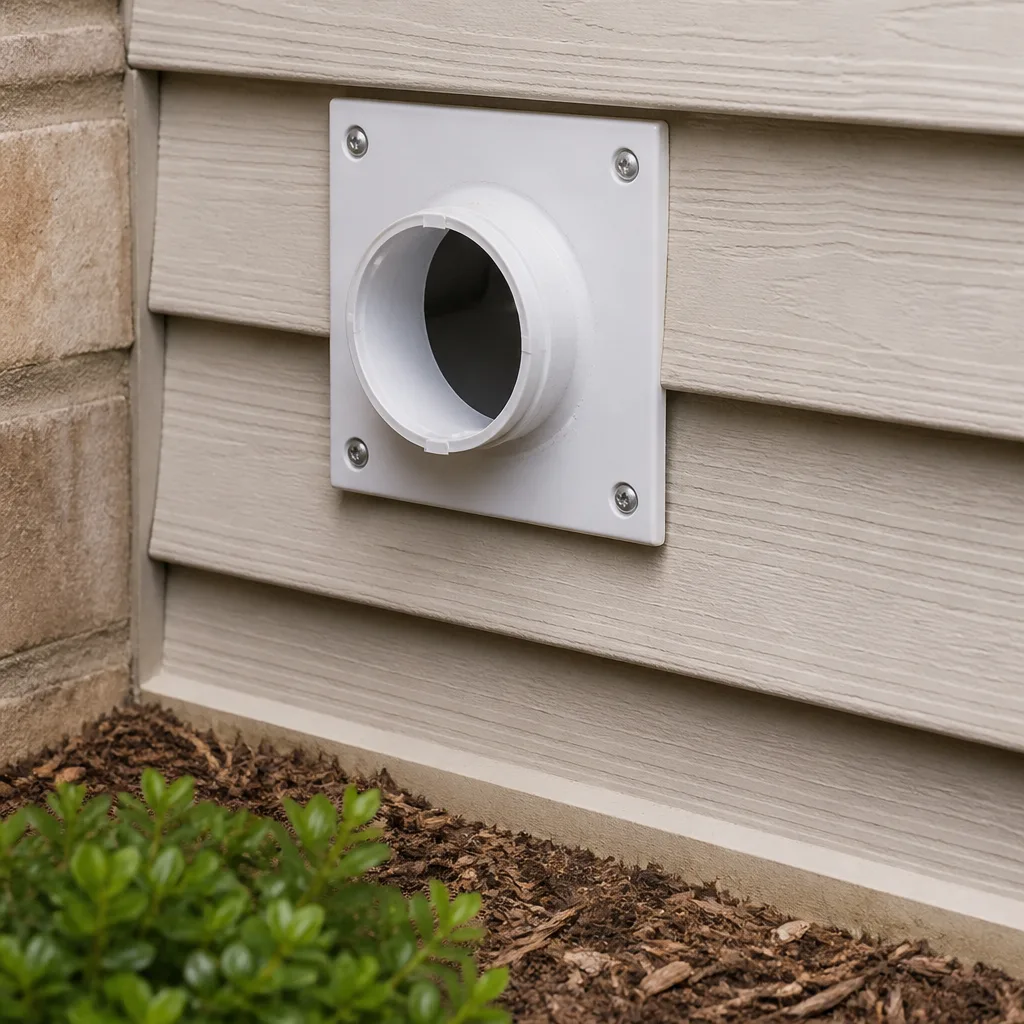 Dryer vent cleaning
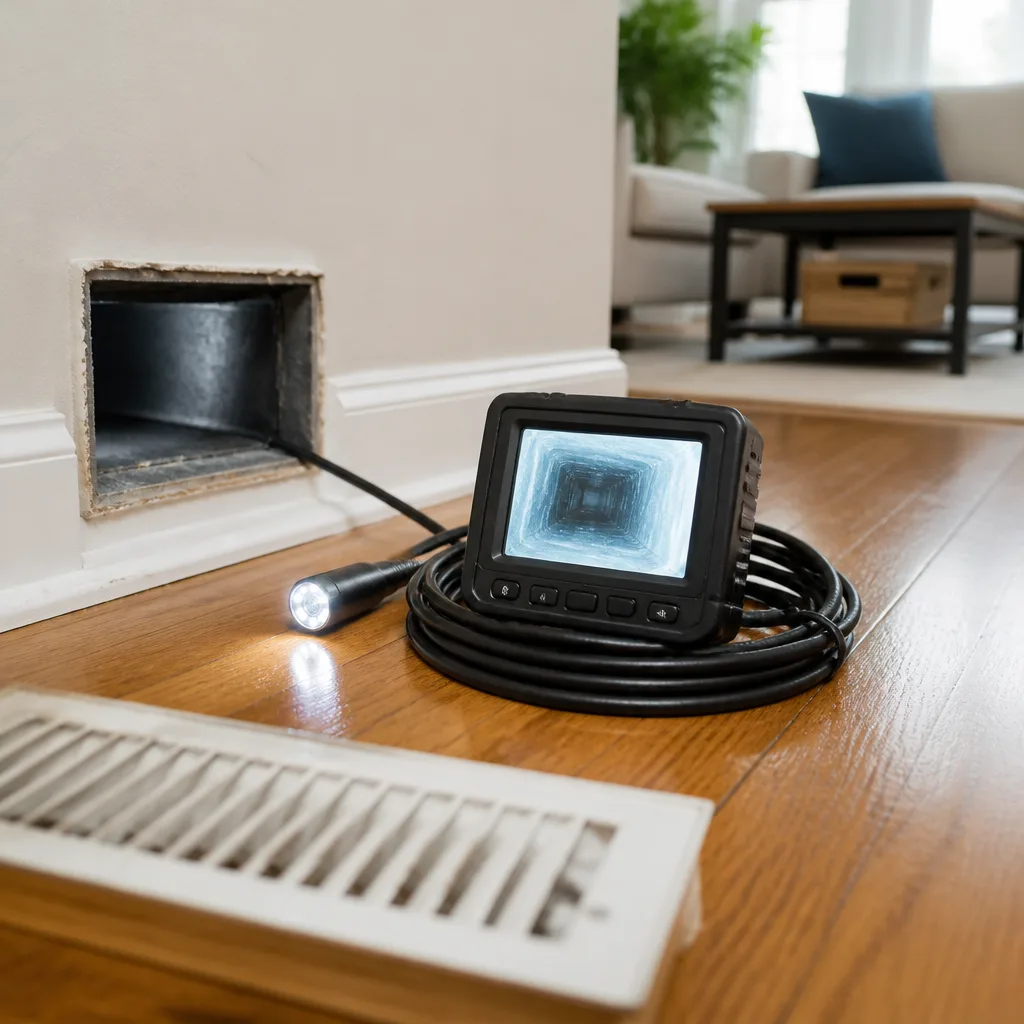 Camera inspection
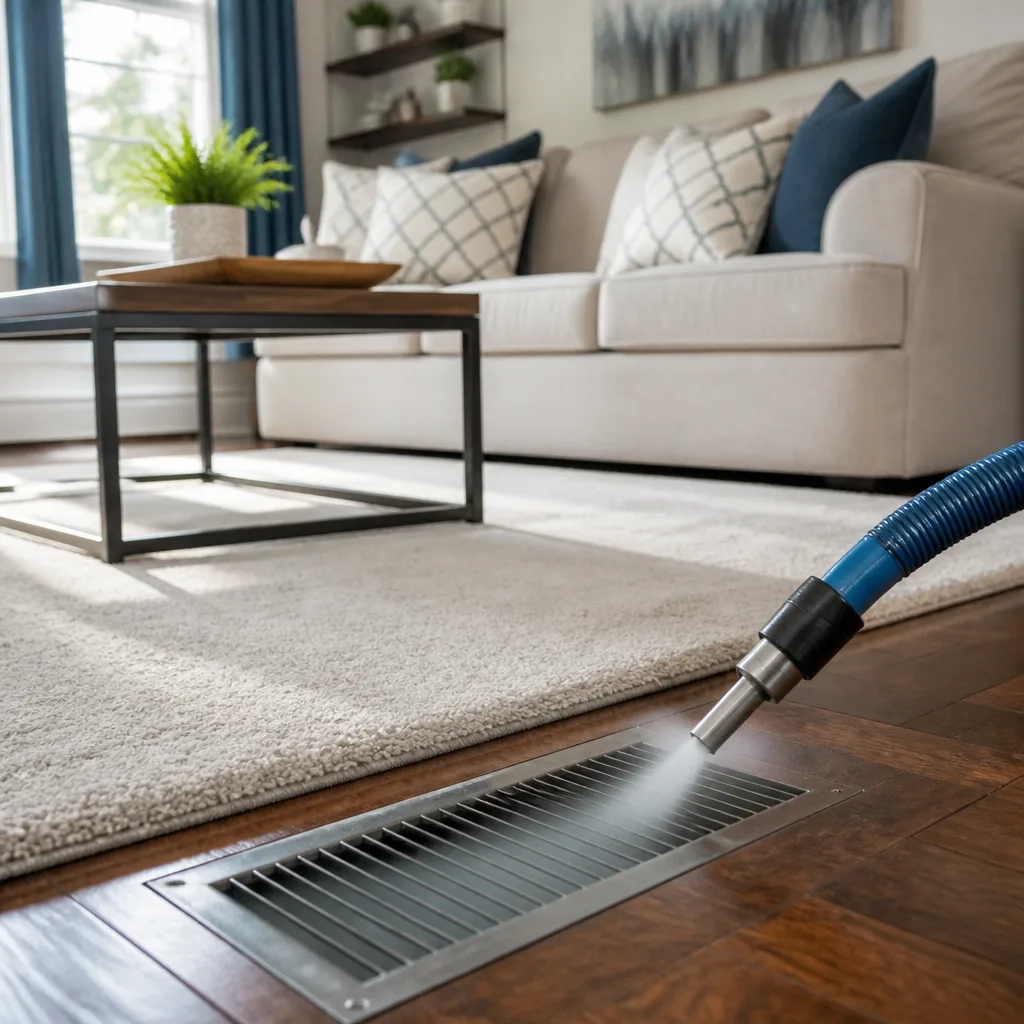 Sanitizing & deodorizing
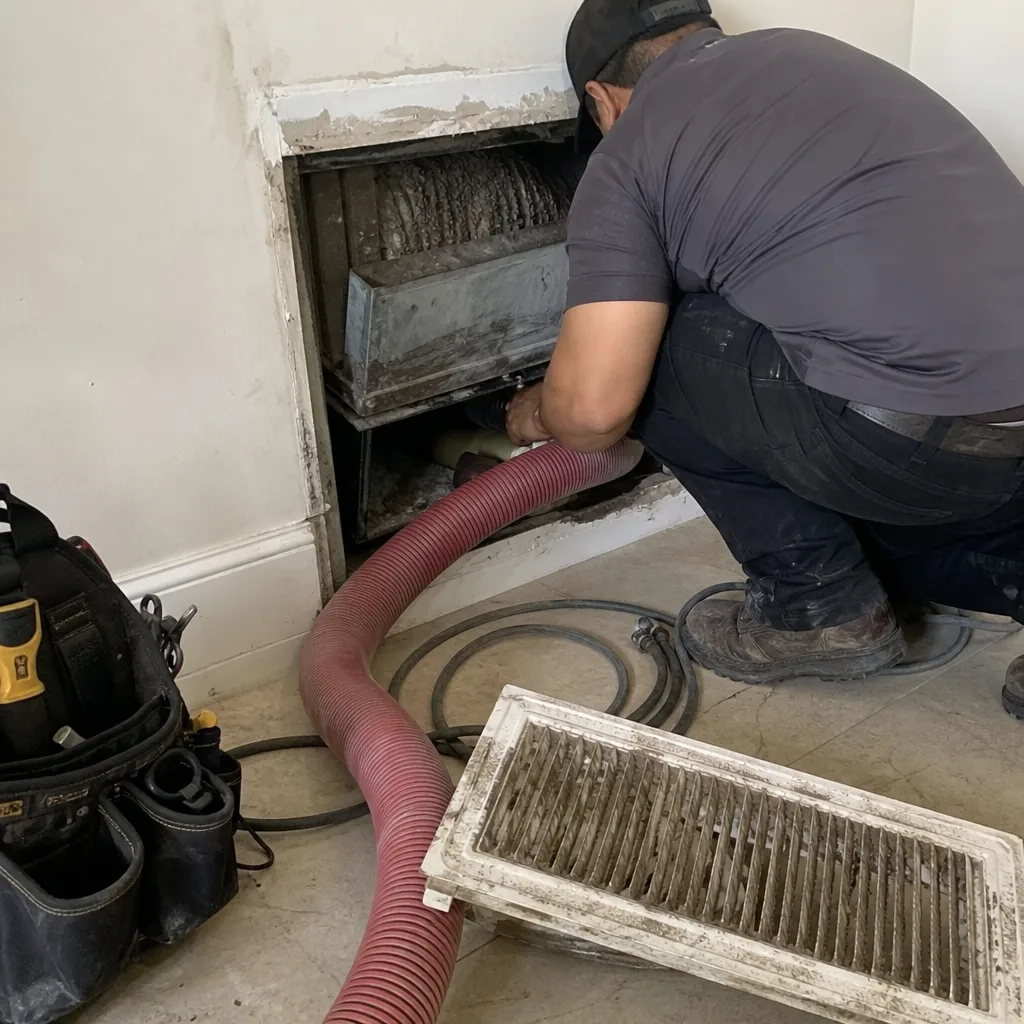
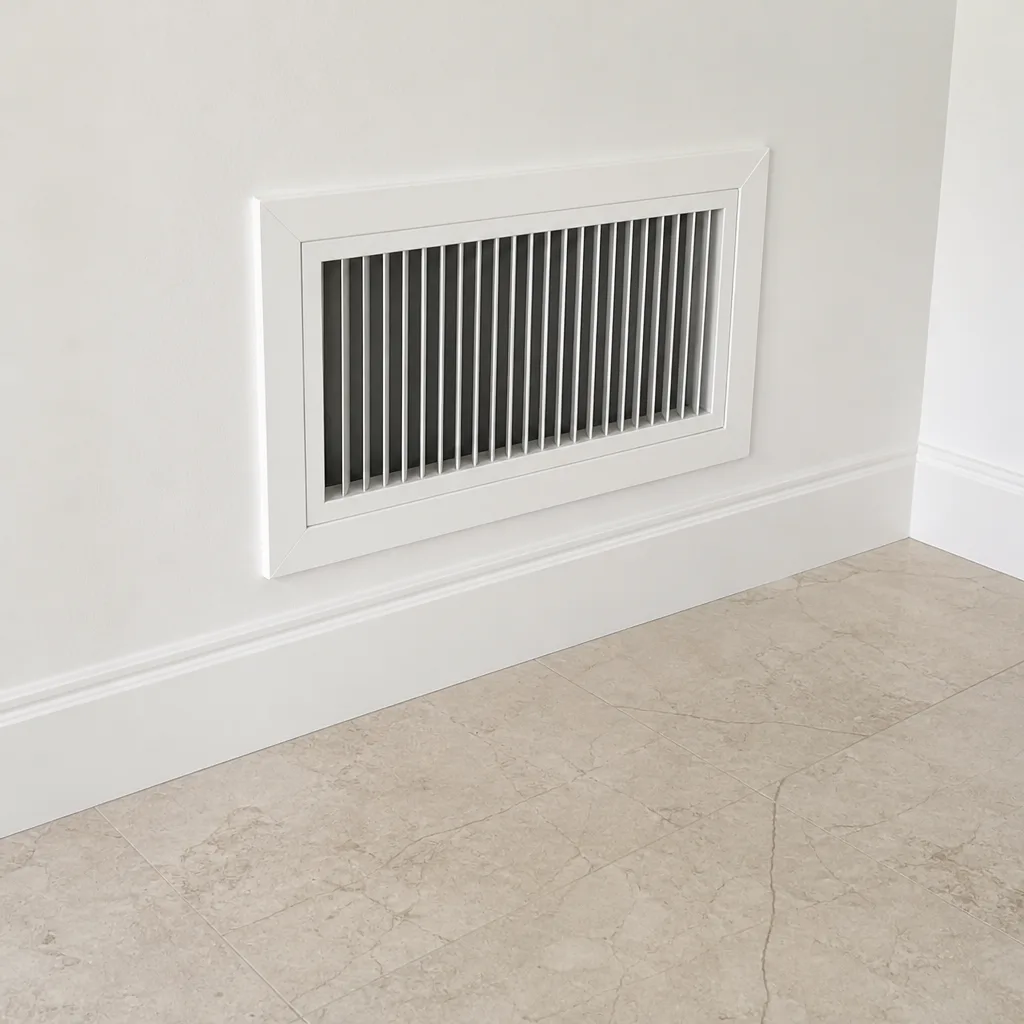
Whole-system duct and dryer vent check with before-and-after photos - you see exactly what came out of your vents
That "$99 whole-house special" is a bait ad - the real number appears once they are in your hallway, or the "clean" is a shop-vac at the register. We photograph the inside of your ducts before and after instead.
Seasonal Air Duct Cleaning Care for Pembroke Pines: Year-Round Homeowner’s Guide
Most national duct-care advice is built for a place with four real seasons, and it tells you to clean your ducts in spring and again in fall. Pembroke Pines doesn’t work that way. Your air conditioner runs for roughly nine months of the year at meaningful load, so “winterizing your ducts” isn’t a thing here. What does matter is the transition into and out of South Florida’s rainy season, the two periods when your air system is under the most strain and the two moments when duct problems go from small to expensive. This guide lays out a duct-care calendar built around Pembroke Pines’ actual climate cycle, not a template written for Ohio. You’ll learn what to inspect in each window, how to build a schedule that fits how your home really breathes, and when to bring in professional equipment.
Quick Answer
In Pembroke Pines, the best times to schedule air duct cleaning and inspection are April through May, before peak cooling demand, and November, right after rainy season ends. Those two windows catch problems when they’re still small. A single inspection before summer and a single cleaning after it covers most homes far better than a generic spring-and-fall national schedule, because it lines up with when your system actually works hardest.
Styles & brands we work with
- Whole-home duct cleaning
- Dryer vent cleaning
- Camera inspection
- Sanitizing & deodorizing
Table of Contents
- Why a National Duct Schedule Doesn’t Fit Pembroke Pines
- April – May: The Pre-Summer Window That Matters Most
- June – October: Rainy Season and the Sealed-Duct Question
- November: The Post-Rainy-Season Check
- December – March: What the Quiet Months Hide
- Building a Two-Service-Per-Year Schedule
- What a Proper Seasonal Inspection Actually Covers
- Cleaning Versus Ashford Air Duct Cleaning
Why a National Duct Schedule Doesn’t Fit Pembroke Pines
Duct care is not about a calendar date. It’s about load. The more hours your air handler runs, the more air moves through your ductwork, the more dust, pollen and moisture that air carries, and the faster your system accumulates the film and debris that eventually show up as musty smells, weak airflow and higher bills. In a cold-climate home, the furnace and the air conditioner each run hard for a few months. In Pembroke Pines, the air conditioner is the main event, and it runs at real load from roughly March into November.
That changes the logic of when to inspect. In a four-season market, spring and fall are natural checkpoints because the system is between seasons and idle. Here, the system barely idles. The only genuine quiet stretch is the dry season from December through March, and even then many Pembroke Pines homes still cycle the AC on warm afternoons. A national spring-and-fall template assumes idle time you don’t have, so following it means you’re inspecting at moments that don’t correspond to your system’s real stress points.
South Florida’s rainy season adds a second variable that cold-climate schedules ignore completely. From June into October, outdoor humidity stays high for months. Any duct system that isn’t fully sealed will pull that humid air into the return side, and moisture inside ductwork is the single biggest driver of the microbial growth homeowners complain about. Wind-driven rain and afternoon storms also put pressure on attic duct runs and connections in ways that a dry-climate guide never addresses. If you’re new to the area, our overview of Pembroke Pines explains how the regional climate shapes home systems here. The rest of this guide maps your duct care to that climate, window by window.
April – May: The Pre-Summer Window That Matters Most
April and May are the highest-stakes months for duct inspection in Pembroke Pines, and most homeowners skip them. Here’s why they matter: this is the window just before peak cooling demand arrives, when your system is about to go from moderate use into its heaviest run of the year. Whatever condition your air system is in during May, it will carry that condition through six months of hard work. Inspecting and cleaning now means you start the heavy season clean, sealed, and operating efficiently, which is a far better position than discovering a breached duct run in August when the system is failing and your house won’t hold temperature.
This is also when contractors are least booked. Demand spikes once June hits and every homeowner with a warm house calls at once. Getting an inspection done in April or May means a more thorough visit with fewer scheduling constraints, and problems found now can be repaired before they become emergencies.
A useful pre-summer checklist looks like this:
- Look at the return grille for a visible dust mat or a fuzzy buildup around the edges.
- Notice whether some rooms are noticeably warmer than others before the heavy season starts.
- Check for a musty smell when the air first comes on after the system has sat idle.
- Watch whether the house reaches its set temperature in a reasonable time on the first hot days.
- Confirm the air filter was changed recently and is the correct size and type for your system.
- Look at visible duct runs in the attic for crushed flex, sagging runs, or disconnected joints.
If any of those raise a flag, this is the month to act. Our air duct cleaning service is designed around pre-season inspection, and it’s a much easier visit than an emergency mid-summer call. Our technicians have up to 15 years of experience reading exactly these early warning signs.
June – October: Rainy Season and the Sealed-Duct Question
During the rainy season, the biggest threat to your air system isn’t visible debris. It’s moisture. For five months, Pembroke Pines sits under sustained humidity, and every gap, disconnected joint, or porous seal in your ductwork becomes a pathway for humid outdoor air to enter the return side and travel through the system. A duct system that loses a small percentage of its air through leaks in dry weather can lose far more when it’s fighting pressure from humid infiltration, and that infiltrating air is wet.
Once humid air gets inside a duct, it condenses on cool surfaces. That damp interior becomes the ideal environment for microbial growth, which is why so many homeowners notice a musty or earthy smell from their vents during the summer rather than in spring. The smell is the symptom. The cause is a sealing problem that lets moisture in. Cleaning a duct that isn’t sealed is a temporary fix; the growth returns as soon as the humidity does. What actually stops it is air duct repair, sealing the leaks and reconnecting the runs that have pulled apart, so the system moves only the air it should.
Two things to know about how this is addressed:
- Source capture matters. During a summer clean, debris and organic matter removed from the duct should be captured and contained, not blown back into the living space. We use Nikro HEPA-rated vacuums and Abatement Technologies negative-air filtration equipment to hold that material at the source.
- Mechanical cleaning beats a hand tool. A rotary-brush system like Rotobrush reaches the full interior surface of the duct, which is what removes the attached film rather than just the loose dust.
A good rule: if your vents smell musty during the rainy season, don’t clean and hope. Have the system inspected for leaks first, and repair before cleaning so the fix holds. That’s the order that lasts.
November: The Post-Rainy-Season Check
November is the second key window, and it’s the mirror image of April. Your system just finished months of heavy use and is about to ease off. This is the moment to look at what all that operation left behind. Filters are loaded, duct interiors have likely accumulated a season’s worth of debris, and any small sealing issue that started in June has had five months to develop. A November inspection catches those conditions before the dry season’s reduced runtime lets them sit unattended for months.
What to check after the heavy season:
- The air filter’s condition after months of peak load. Change schedule should shift with the seasons, not stay fixed year-round.
- Visible dust around return and supply grilles. A light film is normal; a mat or a fuzzy ring suggests a problem inside the duct.
- Any change in how rooms feel compared with early summer. Rooms that were balanced in May and uneven in November point to a developing airflow problem.
- Signs of moisture in attic duct runs or around the air handler. Condensation stains or soft insulation deserve a closer look.
- Airflow strength at each vent. Fading output at the vents furthest from the handler often means a leak or a partial obstruction upstream.
For most Pembroke Pines homes, November is the right time for the second cleaning or a thorough inspection, whichever the season’s use calls for. It’s the seasonal reset that carries your system into the quieter months in good condition.
December – March: What the Quiet Months Hide
The dry season is the most misleading part of the year for air-duct health. Your air conditioner runs less, so the symptoms that were obvious in July start to fade. The musty smell weakens. The weak room feels almost normal because the system is barely working. And that reduced runtime masks developing problems: a leak that was costing you performance in the summer looks harmless when the system is idle most of the day. Homeowners read the quiet as improvement when it’s really just the load coming off.
There’s a second reason to stay alert in these months. Because the system runs less, dust and debris settle rather than circulate. Settled debris in a damp or poorly sealed duct can sit through the quieter season, and when heavy cooling resumes in spring, that accumulated material is redistributed through the home all at once. A dry-season inspection catches settled buildup before the first heavy cooling run pushes it into the air. It’s the easy, low-cost moment to act.
So what should you actually do from December through March? A light inspection, a filter check, and a quick look at any attic or crawlspace duct you can see safely. If your system had a sealing problem in the summer, this is the ideal window to fix it, because the air handler isn’t working against you and repairs hold better. If you noticed a musty smell during the rainy season, don’t let the quieter months convince you it’s solved. It’s dormant, not gone. Dry season is when repair work is easiest to schedule and easiest to get right.
Building a Two-Service-Per-Year Schedule
You don’t need four touchpoints a year. Pembroke Pines homes do well on two, mapped to the real HVAC calendar rather than a national template. The two windows are late spring (just before peak cooling) and late fall (just after rainy season). One visit catches problems before the system is under strain; the other catches what the strain left behind. Together they bracket the heavy season, which is exactly when your air system does the most work.
Here’s how to build that two-visit schedule around your home:
- Book the pre-summer visit for April or May. Ask for inspection and, if the ducts are loaded, a full cleaning. This is the window before contractor demand spikes.
- Book the post-season visit for November. Ask for inspection with a focus on seal integrity, filter condition, and anything the rainy season left behind.
- Check filters every one to two months through the heavy season, and again in December. Frequency follows load, not a fixed quarterly rule printed on a filter package.
- Note the summer symptoms as they happen. A musty smell in July is information; write it down so the November inspection knows where to focus.
- Fix leaks and disconnections as discovered, not later. A small breach left through a rainy season becomes a larger, costlier problem by the next.
A home with pets, recent remodeling dust, or occupants with allergies or asthma may benefit from an additional mid-rainy-season check, especially if the summer smell is persistent. Most homes, though, land well on the two-visit rhythm: one service before the heavy season and one after. That’s the entire calendar, and it beats any generic spring-and-fall plan for a South Florida home.
What a Proper Seasonal Inspection Actually Covers
A real inspection is more than a peek in a vent. Whether it’s spring or fall, a thorough look at your air system should touch the same core areas, adjusted for what the season has done to the ducts since the last visit. The goal is to answer two questions: how much debris has accumulated, and is the system sealed and moving air the way it should?
- The return side. Return ducts do the heaviest lifting and collect the most debris. The return plenum and the main trunk are where a sealed first.
- Supply runs and branch connections. These are the most common points where flex duct pulls apart or a boot fitting separates from the ceiling. A disconnected run dumps conditioned air into the attic instead of your rooms.
- The air handler and coil cabinet. A dirty coil cabinet and a loose connection here affect the whole system’s efficiency and can pull in unconditioned attic air.
- Seal integrity across the system. Not just “is it dirty” but “is it sealed.” Cleaning without checking seals leaves the moisture and airflow problems untouched.
- Filter and return grille condition. The grille is a quick read on the whole system. A mat tells you something is happening downstream.
During a professional clean, we use professional-grade equipment rather than portable shop vacuums: a Rotobrush rotary brush to agitate and lift the film from the duct interior, a Nikro HEPA vacuum to pull it out and contain it, and Abatement Technologies negative-air filtration to keep contaminants out of your living space during the work. The same platform is used in commercial and industrial settings, applied here to a residential system. If you work with premium air-quality gear like Honeywell or Aprilaire components, we know those systems and work around them without jeopardizing manufacturer expectations.
Cleaning Versus Repair: Knowing Which Your Home Needs
Cleaning and repair solve different problems, and seasonal care only works when you get the order right. Cleaning removes what has accumulated. Repair fixes why it accumulated. If your ductwork has a disconnected joint, a crushed run, or a breached seal, cleaning the system without fixing that breach means the debris comes back and any moisture problem continues. The spring and fall visits should always evaluate seal integrity first, then clean what needs cleaning.
The order matters most heading into rainy season. A duct that leaks humidity during the summer will regrow biological film after any clean, no matter how thorough the clean was. Seal it first, then clean. We offer air duct repair alongside cleaning as a core service, so a single visit can diagnose and resolve a breach rather than scheduling a separate contractor. That matters especially when a homeowner has just had a clean and the smell returned three weeks later; that’s almost always an unaddressed sealing problem, not a cleaning problem.
Our full approach to seasonal care, repair, and the equipment we use to do it is covered on the main Ashford Air Duct Cleaning page, and the pre-summer work is described in detail under air duct cleaning. If you suspect a sealing problem rather than simple buildup, start with the repair discussion before booking a clean. It’s the difference between a fix that lasts the season and one that lasts until the next humid summer.
Common Mistakes to Avoid
- Following a national spring-and-fall template. Pembroke Pines has two stress periods, not four seasons. Booking around a cold-climate schedule means inspecting when your system is least stressed and missing the windows that actually matter.
- Cleaning without checking seals first. In a humid climate, unsealed ducts regrow biological growth after a clean. Seal, then clean, or you’ll be paying for the same job again by October.
- Waiting for the musty smell to diagnose a leak. By the time you smell it, moisture has been present long enough to feed growth. Treat the smell as a late warning, not an early one.
- Letting the quiet dry season convince you a summer problem is gone. Reduced runtime masks leaks rather than fixing them. A problem that fades in December returns in June.
- Using a shop vac or portable blower for a seasonal clean. Those tools stir debris into the air instead of containing it, and they can’t reach the full duct surface. Mechanical rotary-brush cleaning with HEPA capture is a different category of work.
- Ignoring the dryer vent. Dryer vents are a separate duct system with a separate risk profile, and many homeowners never have them inspected. It’s a leading cause of residential fires and one of the three core services we handle.
- Booking only in June or July. That’s exactly when demand peaks. The most thorough visits happen in the shoulder windows of April – May and November.
See the difference
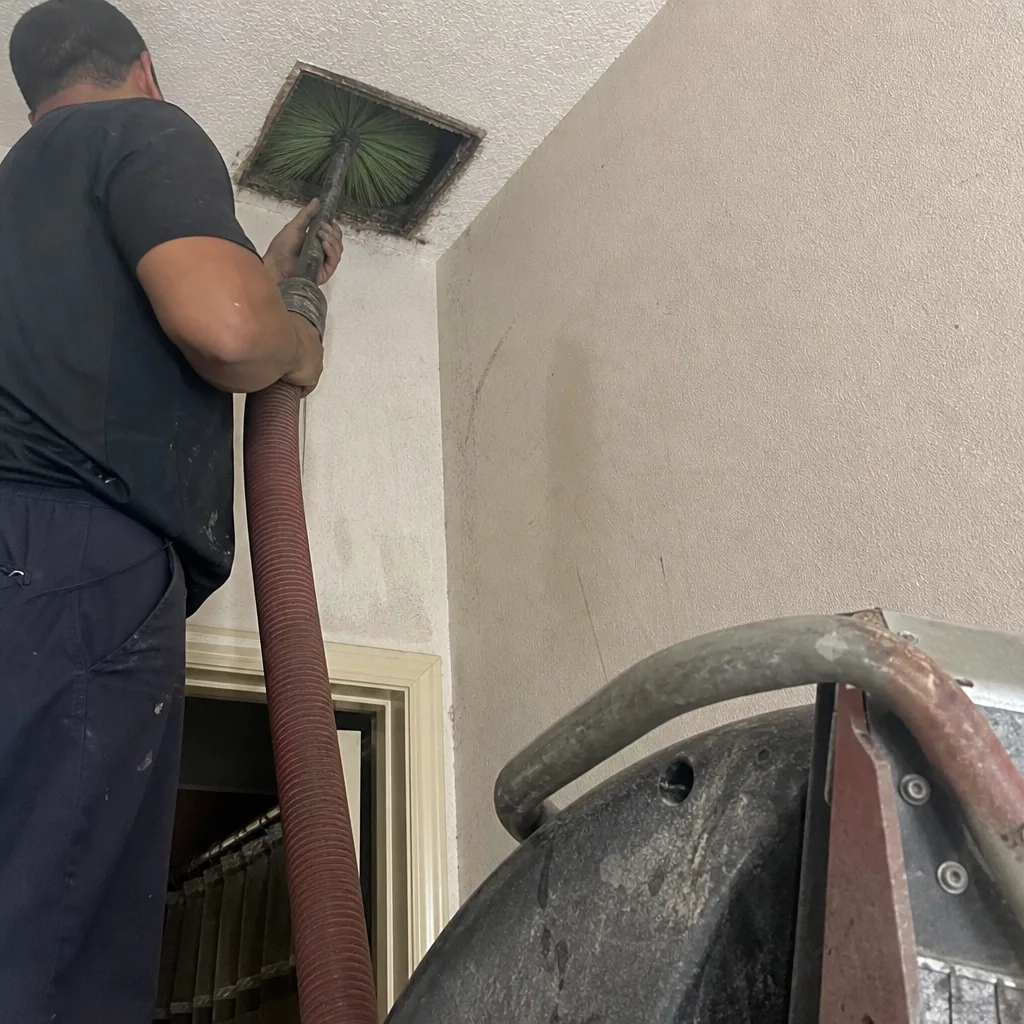 Before
 After
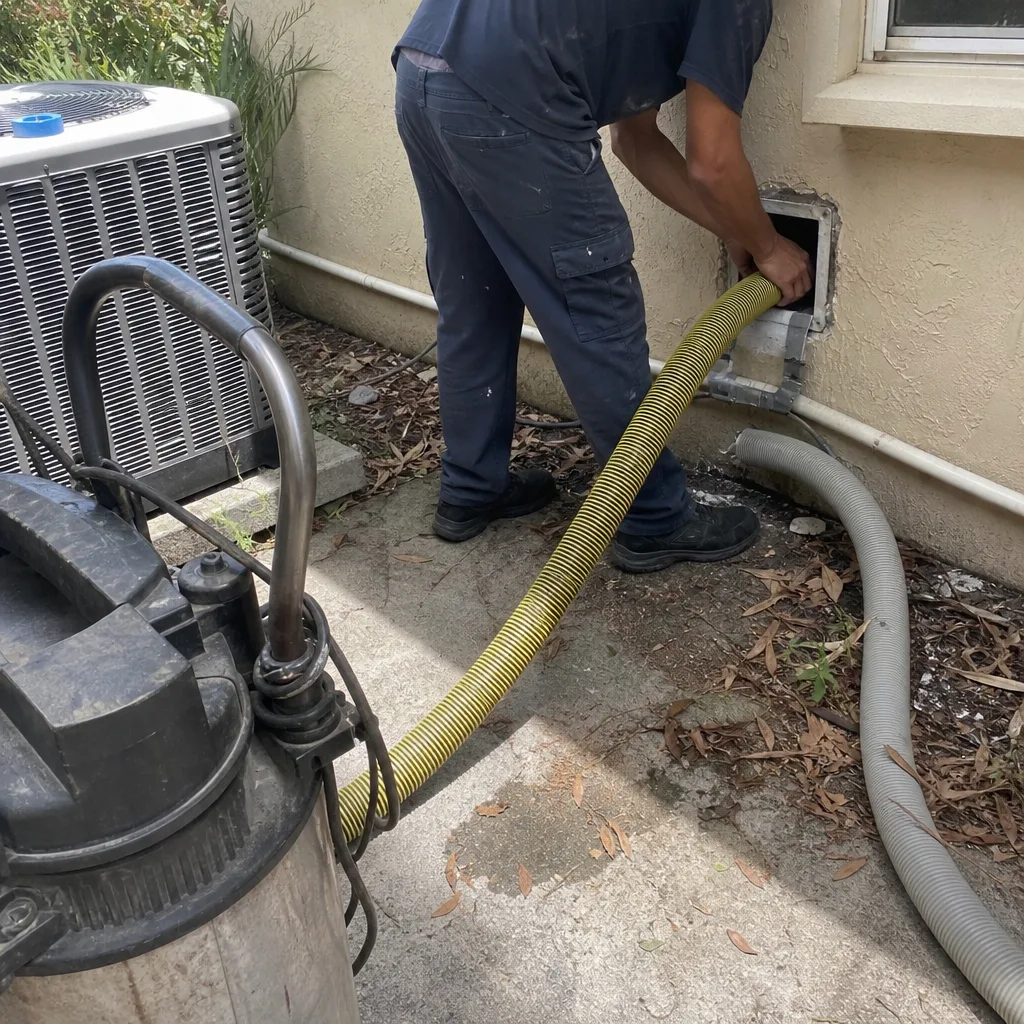 Before
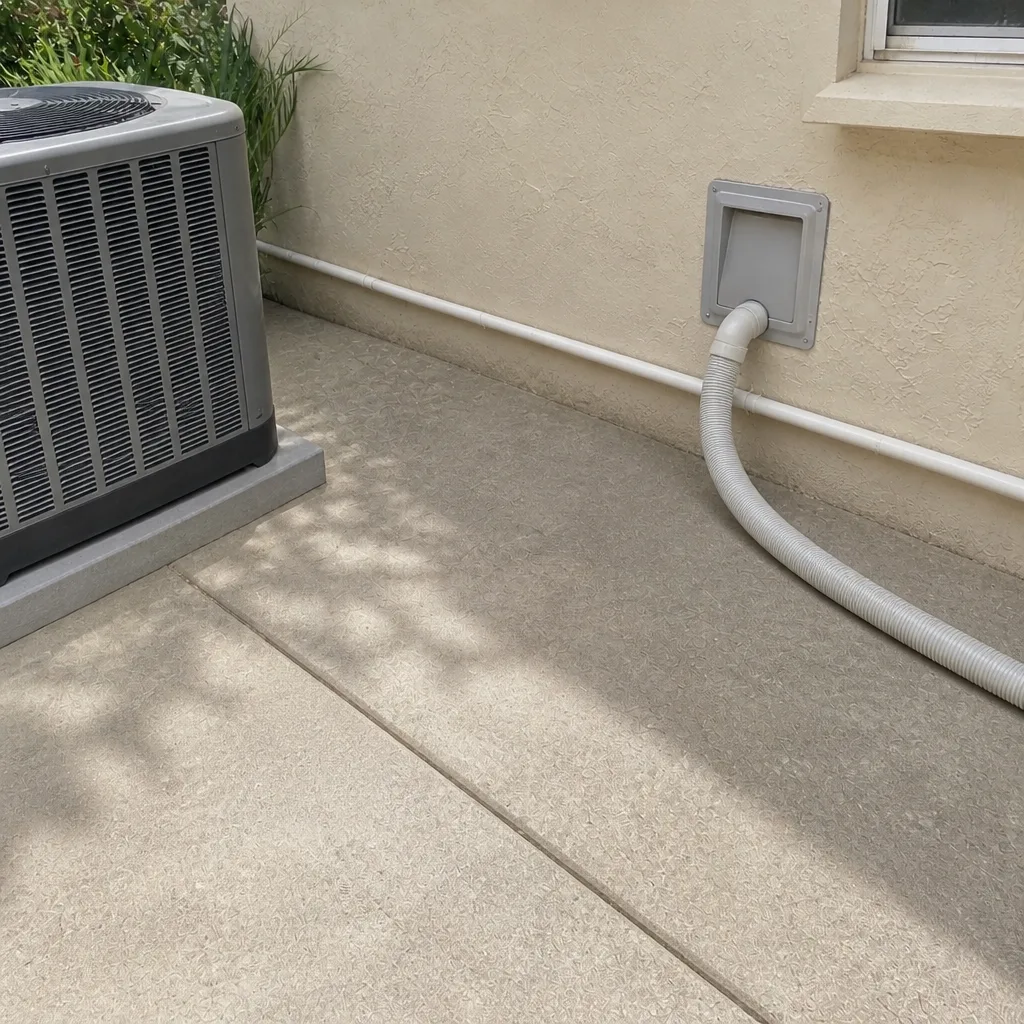 After
 Before
 After
When to Call a Professional
Some conditions call for a professional inspection rather than a filter change. If you notice a persistent musty or earthy smell from your vents during the rainy season, that points to moisture inside ductwork and needs diagnosis. If some rooms stay warm no matter what you set the thermostat to, or airflow fades at the vents furthest from the handler, a disconnected or crushed duct run is a likely cause that only a proper inspection can confirm. If you’ve seen a dust mat on a return grille, visible buildup around vent edges, or condensation stains on attic ductwork, those are all signals worth a look. And if your dryer takes more than one cycle to dry a load, have the dryer vent inspected; our dryer vent cleaning service addresses that separate system.
Ashford Air Duct Cleaning offers free estimates in Pembroke Pines. Call (855) 508-8964 to schedule. We answer 24/7. Fast dispatch from 7am to 7pm, Sunday through Friday.
Frequently Asked Questions
Most Pembroke Pines homes do best with one inspection before the heavy cooling season in April or May and one visit after rainy season in November, with a full cleaning as conditions call for it. That two-visit rhythm fits how long the air conditioner actually runs here, rather than a generic national schedule. Homes with pets, recent remodeling, or allergy-sensitive occupants may need an extra mid-season check. Call (855) 508-8964 for a free estimate and an honest read on your system.
Late spring, just before peak cooling demand, is the highest-value window because whatever condition your ducts are in during May carries through months of heavy use. November is the close second, catching what the rainy season left behind. Both windows beat a mid-summer booking, when demand is highest and the system is already under strain. Call (855) 508-8964 to get on the pre-summer schedule early.
The rainy season drives humid outdoor air into any duct system that isn’t fully sealed, and moisture inside ductwork is the main cause of musty smells and biological growth. Leaks that cost you a little airflow in dry weather become moisture pathways under sustained summer humidity. The fix is to seal the leaks before cleaning, so the clean holds. If your vents smell earthy in July, have the system inspected for seal problems first. Call (855) 508-8964 for an assessment.
Yes. When the air conditioner runs less from December through March, the symptoms that were obvious in summer fade and it’s easy to assume the problem is gone. In reality, a leak or a sealing gap is still there and returns to full effect when heavy cooling starts again. Use the dry season to check filters and address any summer symptoms rather than waiting for them to return.
Cleaning removes debris that has accumulated inside the ducts; repair fixes why it accumulated, such as disconnected joints, crushed runs, or breached seals. In a humid climate the order matters: seal first, then clean. If a clean is followed by the same musty smell a few weeks later, that’s almost always an unaddressed sealing problem, not a bad cleaning. We handle both, so one call can diagnose and resolve the root cause. Call (855) 508-8964 for a free estimate.
Low quotes usually reflect lighter equipment and a surface-only pass: a portable blower or shop vacuum that stirs debris into the air rather than containing it, and a quick skim of the visible ducts. A proper job uses mechanical rotary-brush cleaning with HEPA capture and negative-air filtration to contain what’s removed, and it starts by evaluating seals. Cheaper work often leaves the moisture and leak problems untouched. For a written estimate built around whole-system care rather than a teaser price, call (855) 508-8964.
The Bottom Line
Duct care in Pembroke Pines is a two-visit rhythm, not a four-season plan. Inspect and clean before peak cooling in April or May, then inspect again in November after rainy season ends. That schedule lines up with when your air system actually works hardest, and it catches problems before they get expensive. Watch for musty smells, weak airflow, and uneven cooling during the summer, and fix sealing problems before you clean. The last piece is keeping the two duct systems straight: the air ducts your HVAC runs through, and the dryer vent that carries exhaust and lint. Keeping both on the calendar protects your home rather than just your comfort.
If you want your duct care scheduled around Pembroke Pines’ real climate instead of a national template, a seasonal inspection is the right place to start. Call (855) 508-8964. We answer 24/7. Fast dispatch from 7am to 7pm, Sunday through Friday. Estimates are free, and the price is set per job by the written estimate before any work begins.
Written by the team at Ashford Air Duct Cleaning.