
Last updated November 15, 2026
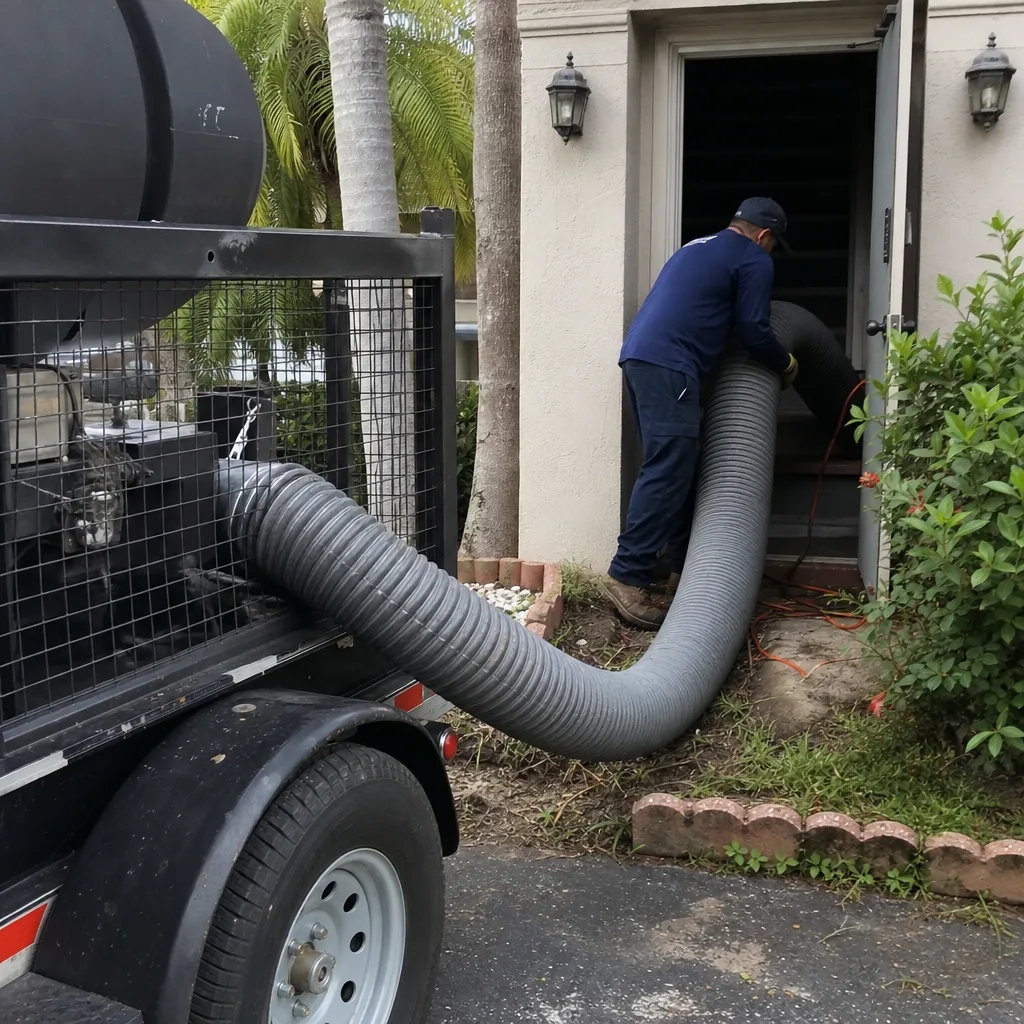
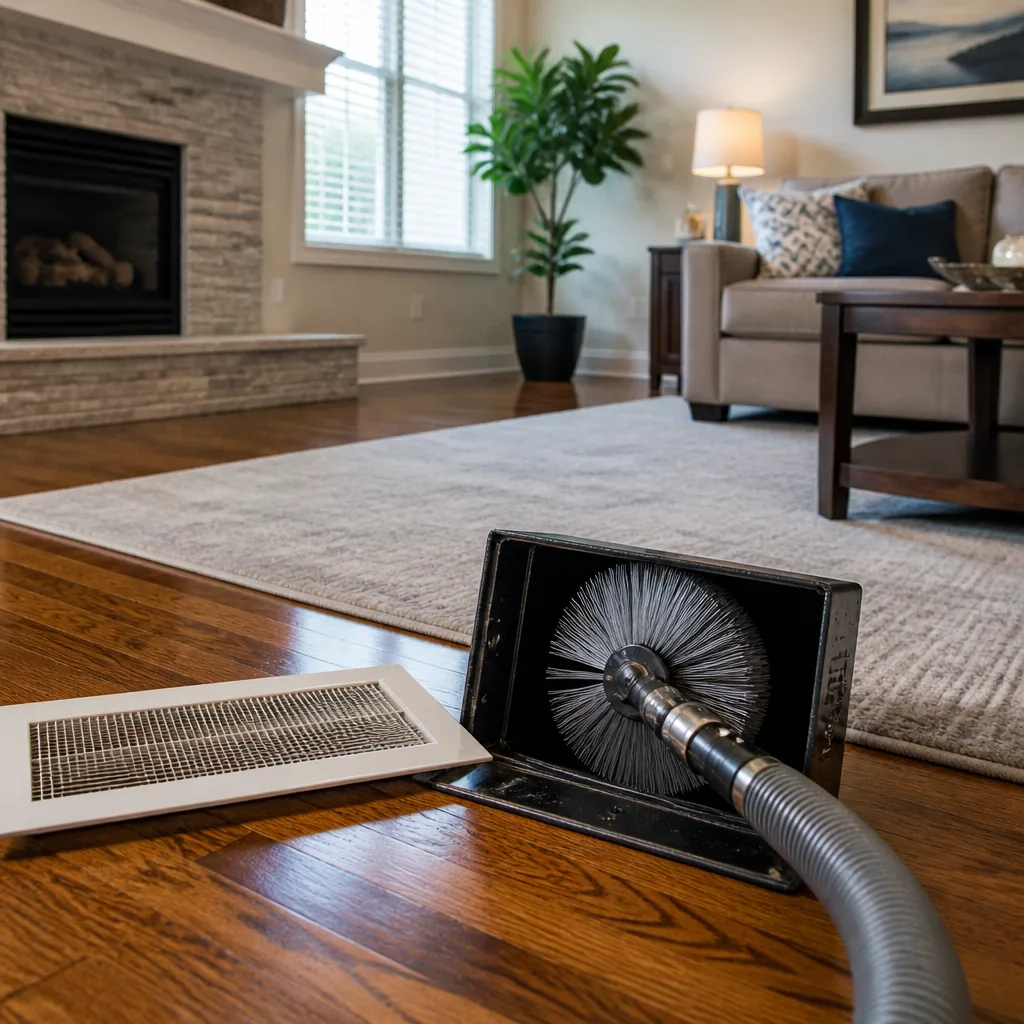 Whole-home duct cleaning
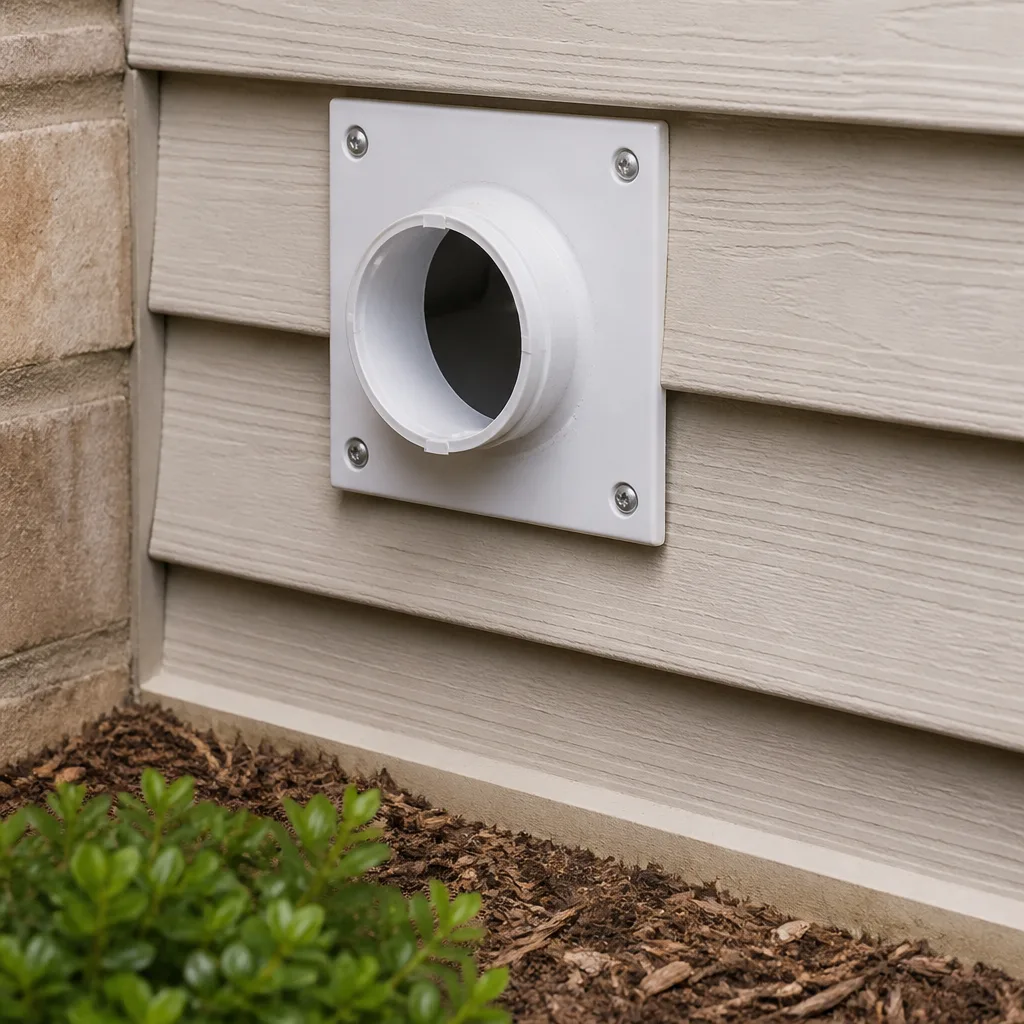 Dryer vent cleaning
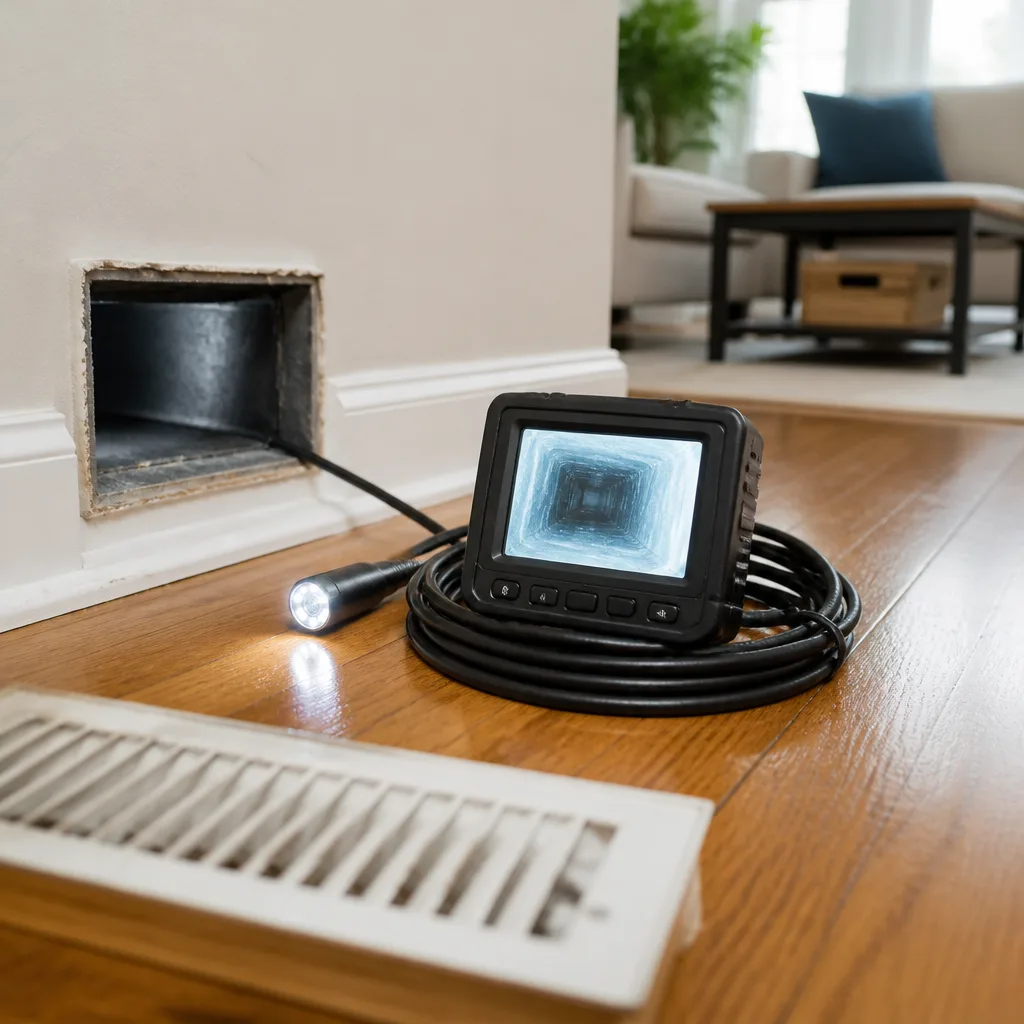 Camera inspection
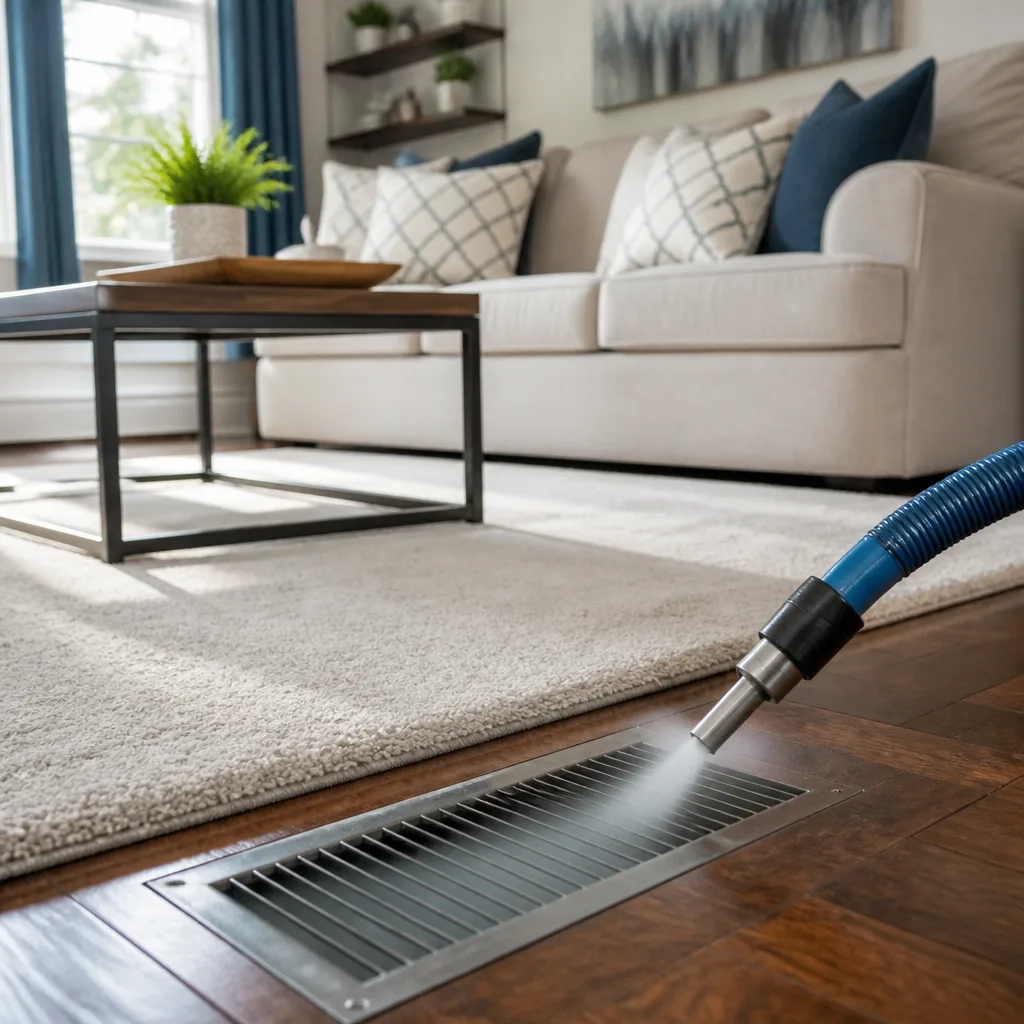 Sanitizing & deodorizing
Whole-system duct and dryer vent check with before-and-after photos - you see exactly what came out of your vents
That "$99 whole-house special" is a bait ad - the real number appears once they are in your hallway, or the "clean" is a shop-vac at the register. We photograph the inside of your ducts before and after instead.
Air Duct Cleaning Emergency Preparedness Guide for Pembroke Pines Homes
Most Pembroke Pines homeowners think of storm prep as shutters, water, and a generator. The duct system in the attic rarely makes the list. That’s the gap that costs people. A named storm can force rain and debris into your air handler and ductwork while the power is out, and the damage stays invisible until you flip the breaker back on and the AC starts pushing that contamination through every room. Wind and water aren’t the only problems either. The mold-friendly heat and humidity that follow a storm do more damage to a wet air system than the storm itself. This guide covers how to protect your ducts before a storm, what to check before you restart anything, and how post-storm duct remediation really works in Pembroke Pines.
Quick Answer
Air duct cleaning after a hurricane or flood in Pembroke Pines is a different job from routine cleaning: the goal is removing water-driven contamination, not just dust. Before you restart your AC after any storm with water intrusion or roof damage, have the air handler and ductwork inspected, photograph everything for your insurer, and don’t run the system on the assumption it dried out. South Florida heat and humidity turn a wet duct system into a microbial problem fast, so the timeline matters as much as the cleaning itself.
Styles & brands we work with
- Whole-home duct cleaning
- Dryer vent cleaning
- Camera inspection
- Sanitizing & deodorizing
Table of Contents
- Pre-Storm Duct Preparation: What to Do Before Landfall
- Post-Storm Assessment: Checks Before You Restart the AC
- Flood-Contaminated Ductwork vs. Storm-Dust Contamination
- Documenting Duct Damage for Your Insurance Claim
- The Timeline Reality for Post-Hurricane Duct Remediation
- When Cleaning Isn’t Enough: Duct Repair After Storm Damage
- Dryer Vent Safety in Storm Season
- Common Mistakes to Avoid
Pre-Storm Duct Preparation: What to Do Before Landfall
Pre-storm duct prep is mostly about limiting where water and wind-blown debris can get in. You can’t storm-proof a duct system, but you can close the obvious openings and make the post-storm assessment easier. The work takes an afternoon and doesn’t require any tools beyond a roll of tape and a camera.
Start with the air handler. In most Pembroke Pines homes the air handler sits in the attic, in a closet, or on a platform in the garage. Whichever applies, know exactly where it is and how the filter door opens before the storm, not after. If you can’t get to it in the dark with the power out, you won’t be able to check it when it counts.
- Photograph the whole system before the storm. Shoot the air handler, the filter slot, the return grilles, the supply registers, and every visible run of flex duct in the attic. These “before” photos are the baseline your insurer will compare against later.
- Seal the exterior openings. Close and latch every window and exterior door. Check that the outdoor condenser unit is secured and that no soffit or gable vent is loose. A loose soffit vent is a direct path for driven rain into attic ductwork.
- Tape over exposed filter slots and open plenum connections. If your air handler has an open filter slot or an unsealed connection to the return plenum, cover it with tape or plastic sheeting so wind-driven moisture can’t blow straight into the cabinet.
- Move anything stored in the attic off the duct runs. Boxes, holiday bins, and old furniture sitting on flex duct crush it and can puncture the jacket. Clear the ductwork so a fallen branch or shifted insulation has less to damage.
- Note where the attic access is and keep a clear path to it. After the storm you’ll want to look into the attic without moving furniture in the dark.
- Write down the filter size. You’ll want a fresh filter ready before the first post-storm restart, and the size is printed on the old one.
If you have a whole-home dehumidifier or an Aprilaire or Honeywell air-quality control tied into the system, note its settings before the storm. Knowing the pre-storm configuration helps a technician confirm later whether the equipment took on water. We work around those controls regularly, and getting them checked by someone who understands them beats guessing.
Post-Storm Assessment: Checks Before You Restart the AC
This is the step most people skip, and it’s the one that matters most. The instinct after a storm is to get the AC running the moment the power comes back. If your home took on water, had roof damage, or lost shingles, running the system before an inspection can spread contamination through the whole house and make a bad situation worse.
Here’s the protocol we recommend, in order:
- Restore power, but don’t run the AC yet. Get the house powered and lit. Leave the thermostat off.
- Look at the ceiling and walls around each supply register. Water stains, sagging drywall, or bubbling paint near a register mean water got above the ceiling and may have reached the ductwork.
- Check the attic for standing water, wet insulation, and discolored duct jacket. Flex duct has an outer jacket and insulation. A soggy or stained jacket means water reached the duct. Look for ceiling stains and water lines on the air handler cabinet too.
- Inspect the air handler cabinet and filter. Open the filter door. A wet or damp filter, standing water in the cabinet, or a musty smell that wasn’t there before are all stop signs.
- Check the outdoor unit. Clear debris from around the condenser and confirm it’s sitting level. If it shifted or took on water, that’s a separate problem from the ducts.
- Smell the return air. A musty, earthy, or chemical smell at the return grille is a strong signal something in the system got wet and stayed wet.
- Photograph everything you find and don’t run the system until it checks out. If any of the above look wrong, get a professional assessment before the first restart.
The heat and humidity in Pembroke Pines after a storm work against you. A duct system that stayed wet can support microbial growth quickly, and running the air handler then pushes spores and moisture through the house. This is where the equipment difference matters: an inspection with Ashford Air Duct Cleaning uses negative-air filtration and HEPA-rated vacuum equipment, so what’s found stays contained instead of being blown back into the living space.
Flood-Contaminated Ductwork vs. Storm-Dust Contamination
Not all post-storm duct contamination is the same, and the two types need completely different responses. Getting this distinction right is the difference between a cleaning job and a remediation job.
Storm-dust-only contamination is what happens when a storm drives dust, pollen, and fine debris into the home through open windows, gaps, or a system that ran during high winds. The ductwork stays dry. The contamination is superficial: settled particulate on duct surfaces, a dirty filter, dusty registers. Standard air duct cleaning with rotary-brush agitation and HEPA extraction handles it well. The system is dry, the structure is intact, and cleaning restores it.
Flood-contaminated ductwork is a different animal. This is ductwork that took on water, either directly through a breach or indirectly through a flooded air handler, a wet attic, or storm surge that pushed moisture into the system. The signs include:
- Damp or wet insulation on flex duct, or a jacket that’s stained or sagging
- Standing water or heavy condensation inside the air handler cabinet
- A persistent musty or earthy smell at the returns that doesn’t clear after a filter change
- Visible discoloration, staining, or surface growth on duct interior or insulation
- Water lines or mud staining on the air handler or plenum
Flood-contaminated ductwork can’t just be vacuumed and called done. The moisture has to be addressed, the affected sections often need to come out, and the system needs to be dried and verified before it’s put back into service. Cleaning a wet duct system without fixing the moisture just spreads the problem. This is exactly why Ashford offers Air Duct Repair as a core service rather than cleaning alone: we can diagnose and fix breached, disconnected, or degraded ductwork that cleaning can’t solve.
Documenting Duct Damage for Your Insurance Claim
Documentation is the least glamorous part of post-storm recovery and the one that decides whether your claim covers the duct work. The order matters: document before any cleaning, repair, or remediation begins. Once a duct run is cleaned or replaced, the evidence of the damage is gone.
Here’s what to capture, and how:
- Photograph and video the whole system before anything is touched. Wide shots of the attic, close-ups of the air handler, the filter, each visible duct run, and every register. Over-document rather than under-document. Move slowly and narrate what you’re seeing on video.
- Capture the water evidence. Water lines, mud staining, damp insulation, warped duct jacket, and ceiling stains. Get a tape measure or a coin in the frame for scale.
- Keep the filter. A wet, dirty filter is physical evidence that the system took on moisture and debris. Bag it and label it rather than tossing it.
- Record dates, times, and the storm name. Note when the damage happened, when power was restored, and when you first noticed each issue.
- Get a written professional assessment before cleaning. A technician’s written findings, with photos, carry far more weight with an adjuster than a homeowner’s description alone.
- Don’t discard damaged components until the claim is settled. Removed duct sections, the old filter, and any failed parts are evidence.
- Ask for before-and-after photos of the work itself. A reputable provider gives you photos of your own ducts, not stock images. Ashford provides before-and-after photos of the customer’s actual ductwork as part of the job.
We can work with your insurer on the documentation side, and we’ll tell you plainly what we see. We won’t overstate a problem to pad a claim, and we won’t minimize one to make the job easier.
The Timeline Reality for Post-Hurricane Duct Remediation
Timing matters more in South Florida than almost anywhere. The heat and humidity that follow a storm create ideal conditions for microbial growth in anything that stayed wet. Ductwork is a closed, dark, damp environment with a steady supply of organic dust and debris. That’s a growth chamber. The longer a wet duct system sits, the wider the problem spreads.
In practical terms, the escalation looks like this. In the first day or two after water intrusion, the issue is mostly moisture and surface contamination. A prompt assessment and drying can often save the ductwork. Within a few days, growth can start on wet insulation and interior surfaces, and the scope shifts from cleaning to removal of affected sections. Within a couple of weeks in Pembroke Pines summer conditions, a problem that started in one section of ductwork can involve the air handler, the plenum, and multiple runs. By the time a homeowner notices the smell and calls, the job is larger and more expensive than it needed to be.
That’s why our guidance is simple: if your home took on water or roof damage, don’t wait for the smell. Get an assessment during the first window you can. A free estimate now is worth far more than a remediation bill later. And when a technician arrives, the job is priced as one flat price per system, agreed in writing before work starts, so you know the scope and the number before anything is touched.
When Cleaning Isn’t Enough: Duct Repair After Storm Damage
Storm damage doesn’t just contaminate ductwork; it breaks it. High winds and falling limbs crush and separate flex duct. Shifting attic insulation can pull a run loose from its boot. A pressurized attic can pop a connection at the plenum. These are repair problems, not cleaning problems, and a clean-only provider will clean around them and leave you with a system that leaks, loses efficiency, and pulls attic air into the house.
Signs your ductwork needs repair rather than cleaning:
- A room that never gets the airflow it used to, or air that feels weak at every register
- Visible disconnected or collapsed duct runs in the attic
- Torn or missing outer jacket on flex duct
- Dust settling on surfaces right after a cleaning
- Higher energy use with no other explanation
- A whistling or rushing sound at registers or the air handler
Ashford can diagnose and repair breached, disconnected, and degraded ductwork as part of the same visit as the cleaning. One call covers the whole system arc: clean, repair, and protect. That matters after a storm, when coordinating an HVAC company, a cleaning crew, and a repair contractor is the last thing you want to be doing. We use professional-grade equipment on every job, including Rotobrush rotary-brush systems and Nikro HEPA-rated vacuums, and run Abatement Technologies negative-air filtration during service so contaminants are captured at the source.
Dryer Vent Safety in Storm Season
Storm season raises the stakes on dryer vent cleaning, and it’s the duct issue homeowners most often ignore. Lint buildup in a dryer vent is a leading cause of residential fires. After a storm, debris, nesting material, and moisture can add to that buildup, and a clogged vent makes the dryer work harder and run hotter. If your dryer takes two cycles to dry a load, that’s a vent problem, not a dryer problem.
During storm prep, check the exterior dryer vent flap to make sure it’s not stuck open or clogged with debris. After a storm, clear any leaves or debris from the outside hood and confirm the flap moves freely. If you haven’t had the vent cleaned in a while, or you notice longer dry times or excess heat, schedule dryer vent cleaning. It’s a standalone service, so you don’t need to bundle it with anything else. It’s one of the simplest fire-risk reductions available to a Pembroke Pines homeowner.
Common Mistakes to Avoid
- Restarting the AC before an inspection. If your home had water intrusion or roof damage, running the system before it’s checked pushes contamination through the house. Restore power, then inspect first.
- Cleaning before documenting. Once a duct is cleaned or replaced, the evidence is gone. Photograph and video everything before any work begins, or your claim may not cover it.
- Treating flood contamination like dust. A wet duct system isn’t fixed by a vacuum pass. If the insulation and air handler stayed wet, cleaning without addressing the moisture just spreads the problem.
- Waiting for the smell. By the time you smell mustiness at the returns, growth has usually spread. In Pembroke Pines heat and humidity, call for an assessment at the first sign of water in the system.
- Hiring a clean-only provider after storm damage. If your ductwork is breached or disconnected, cleaning around the damage leaves you with a leaking system. Make sure whoever comes out can also repair.
- Assuming the system dried out on its own. Flex duct insulation holds moisture long after the surface feels dry. “It looks fine” isn’t a moisture check.
- Skipping the dryer vent. Storm debris and lint together are a fire risk. A quick check of the exterior vent flap and a professional cleaning if it’s due is cheap insurance.
See the difference
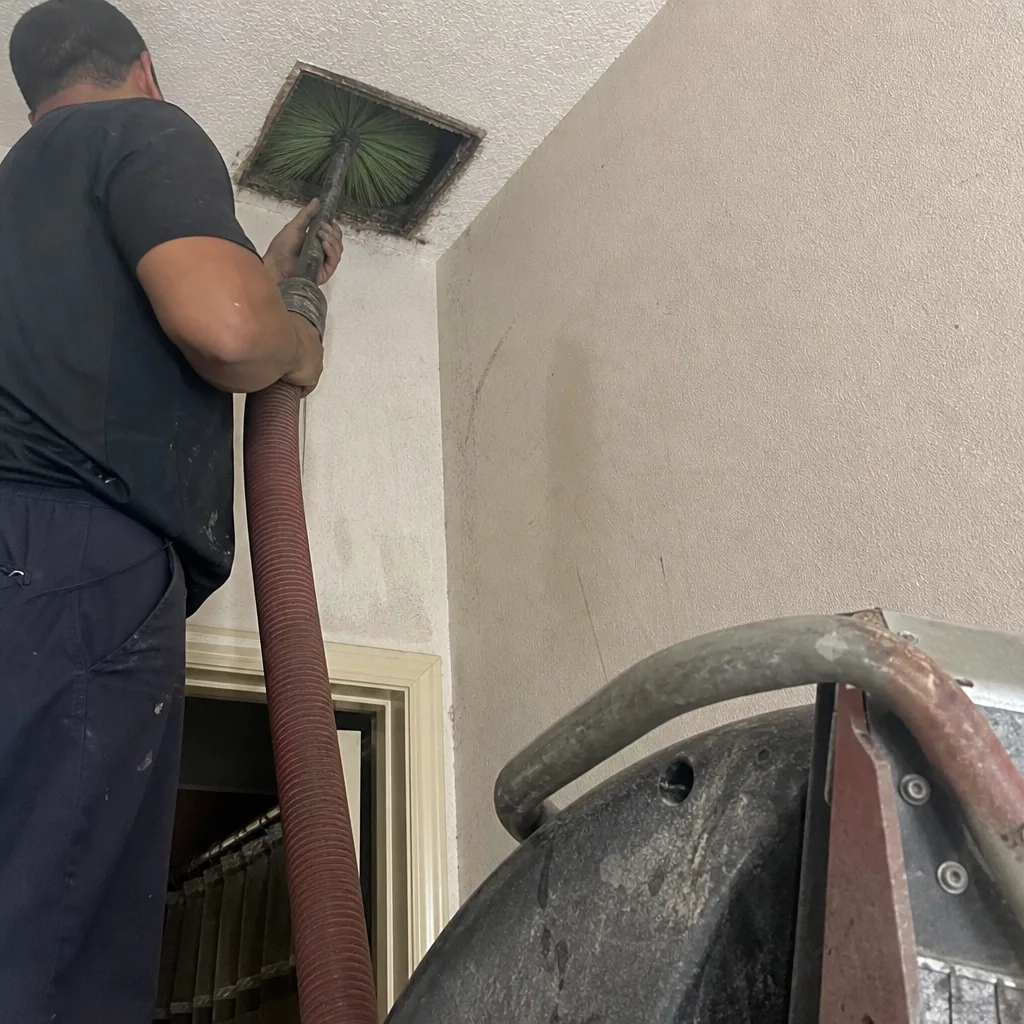 Before
 After
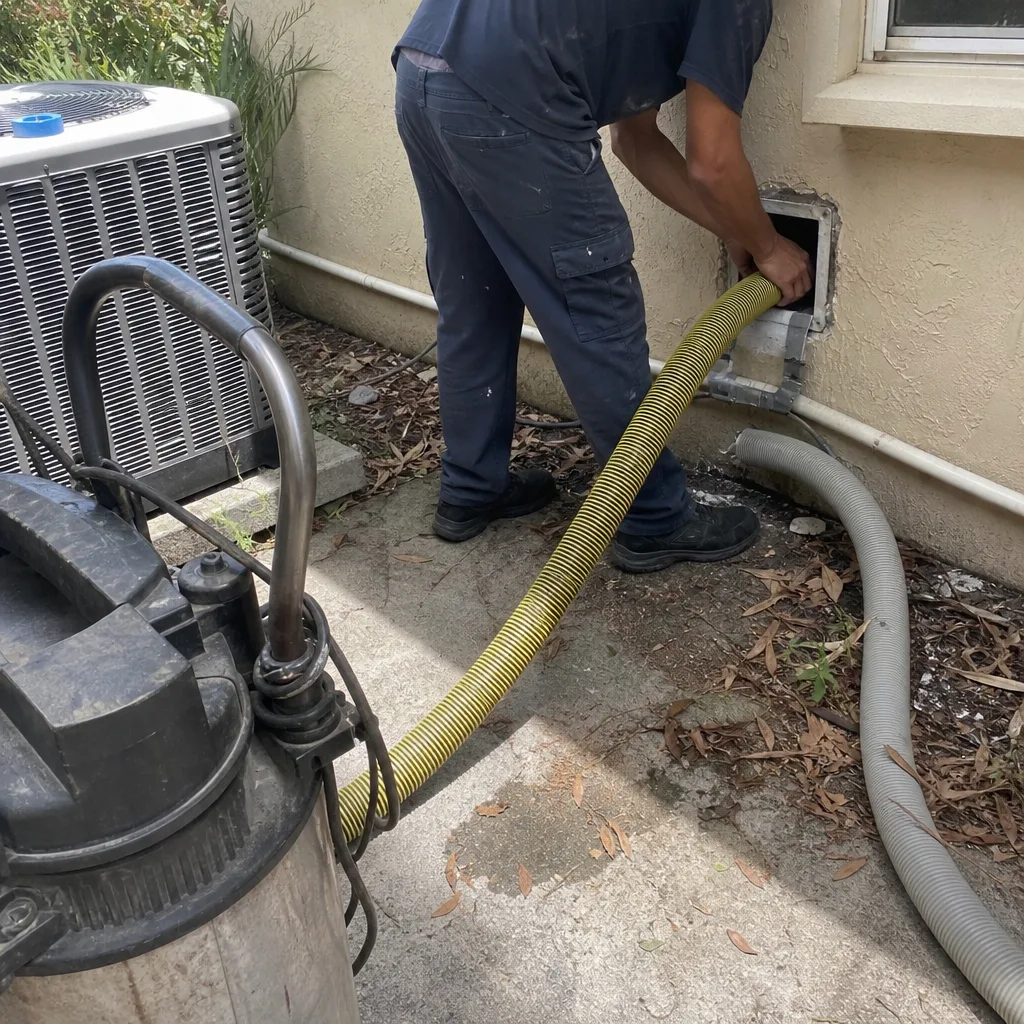 Before
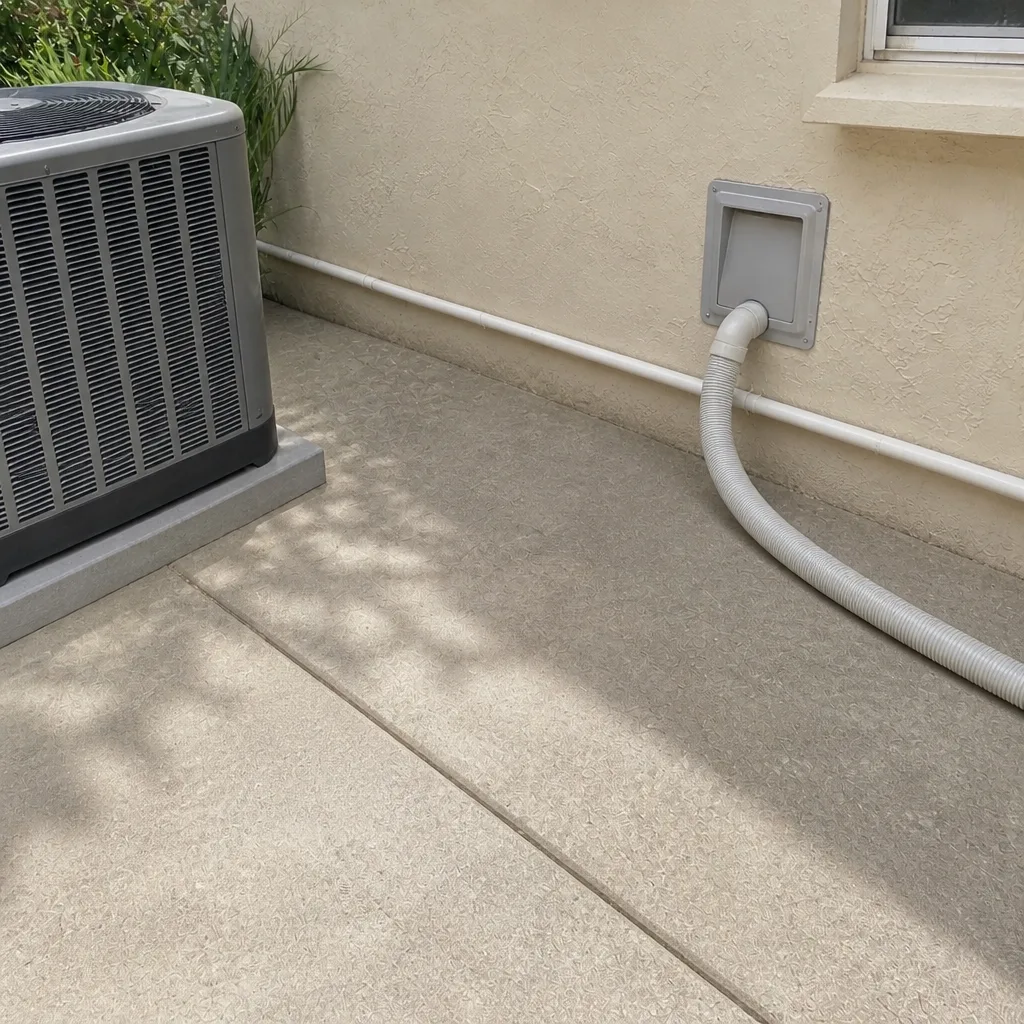 After
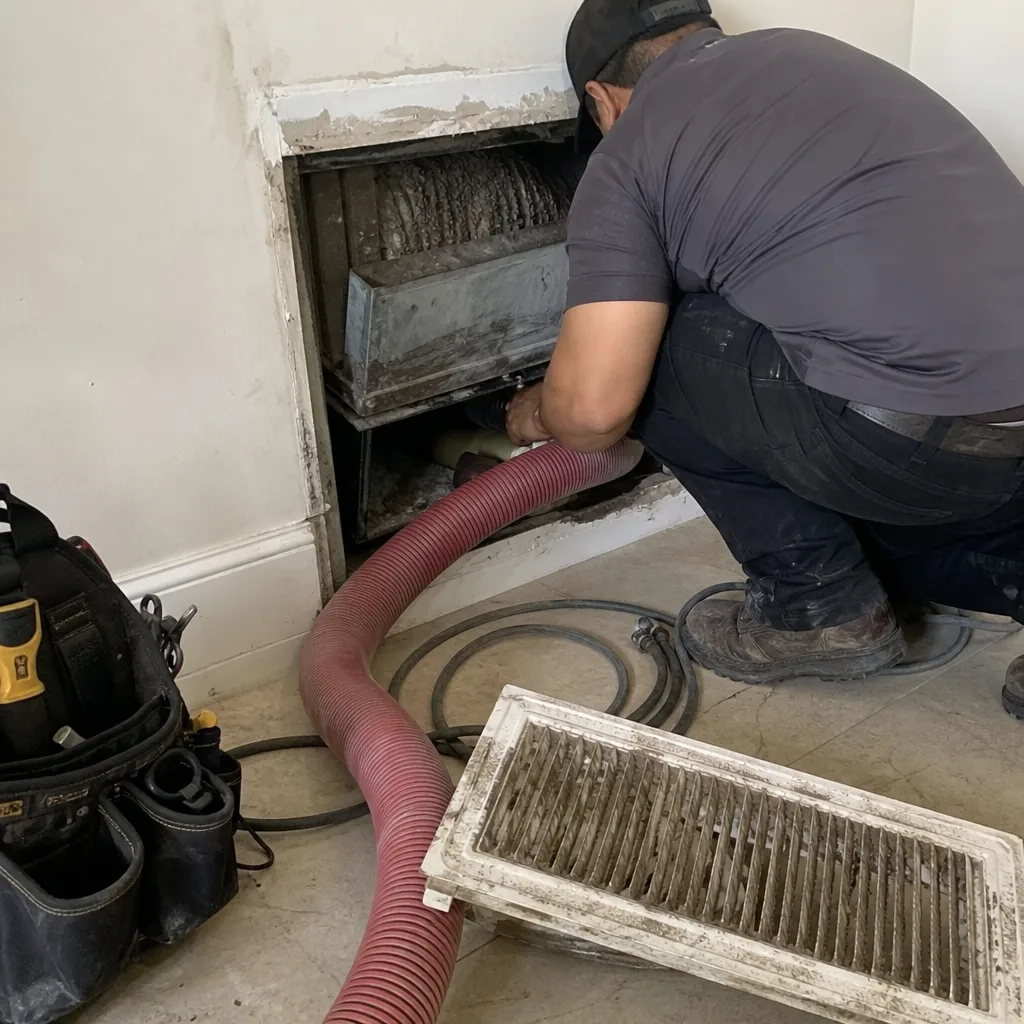 Before
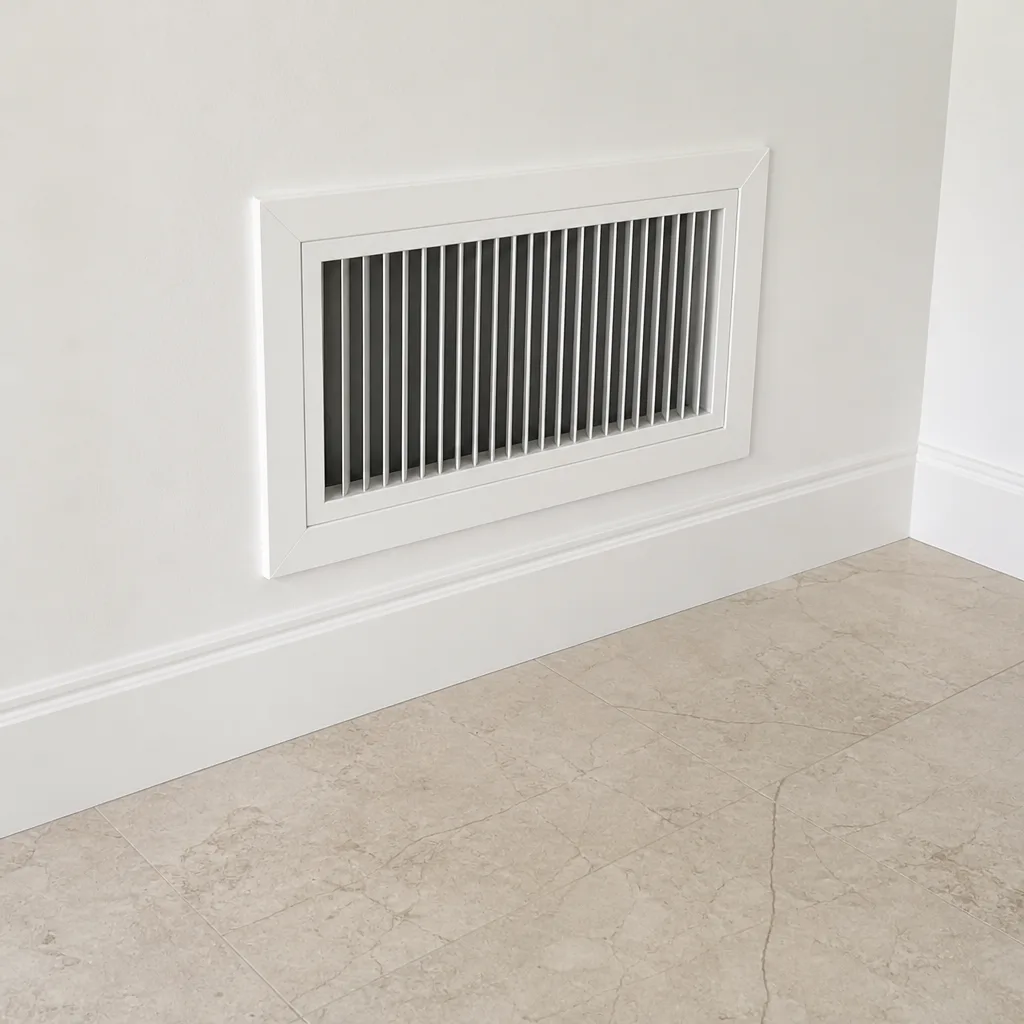 After
When to Call a Professional
Call a professional if your home had water intrusion, roof damage, or lost shingles and the AC hasn’t been inspected; if you smell mustiness at the returns or see staining on ductwork; if a room lost airflow; if you see water in the air handler cabinet; or if your dryer takes more than one cycle to dry a load after storm cleanup. Also call if you’ve taken on the job yourself and want the work verified before you file a claim. Ashford Air Duct Cleaning offers free estimates in Pembroke Pines. Call (855) 508-8964. We answer 24/7. Fast dispatch from 7am to 7pm, Sunday through Friday. Every job is priced as one flat price per system, agreed in writing before work starts, and you get before-and-after photos of your own ductwork.
Frequently Asked Questions
Post-storm duct work is priced per system after an on-site assessment, because the scope depends entirely on whether the ductwork stayed dry or took on water. Storm-dust-only contamination is a cleaning job; flood-contaminated ductwork may involve removal of affected sections and repair. We give you a written flat price per system before work starts, with no per-vent pricing. Call (855) 508-8964 for an exact quote – estimates are free.
Only if you’ve confirmed there was no water intrusion or roof damage and the system passed a visual check. If the home took on water, lost shingles, or shows ceiling stains near registers, don’t run it until it’s inspected. Restoring power and running the AC can spread contamination through every room. When in doubt, get an assessment first.
Storm dust is dry, settled particulate that a standard cleaning removes. Flood contamination means water reached the duct system or air handler, and the fix is a remediation job, not just a cleaning. Telltale signs include damp insulation, water lines on the air handler, mud staining, and a musty smell at the returns that doesn’t clear after a filter change.
Photograph and video the entire system before any cleaning or repair, capture all water evidence, keep the wet filter, note dates and the storm name, and get a written professional assessment with photos. Don’t discard damaged components until the claim is settled. We can provide written findings and before-and-after photos of your own ducts to support your claim.
In Pembroke Pines heat and humidity, not long. Wet insulation and interior duct surfaces can start supporting microbial growth within days. A problem that could be handled with prompt drying and cleaning can turn into a removal-and-repair job within a couple of weeks. Get an assessment during the first window you can.
Usually because the scope is smaller than the problem. A quote that assumes dry ductwork, skips the air handler, or doesn’t include repair won’t hold up once water damage is actually found. Ask what’s included, whether the air handler is inspected, and whether the provider can repair damaged ductwork. One flat price per system, agreed in writing before work begins, protects you from the surprise.
The Bottom Line
Post-storm duct problems in Pembroke Pines are mostly preventable and almost always cheaper when caught early. Protect the air handler and access points before a storm. After the storm, restore power but inspect before you run the AC. Document everything before anyone cleans a duct. Distinguish dry storm dust from flood contamination, because the fix is different. And understand that the heat and humidity on the Pembroke Pines side work against a wet system every day you wait. Clean, repair, and protect is a sequence that starts with an inspection. Call (855) 508-8964 for a free estimate, and read more about how we work on our main service pages.
Written by the team at Ashford Air Duct Cleaning.