
Last updated November 15, 2026
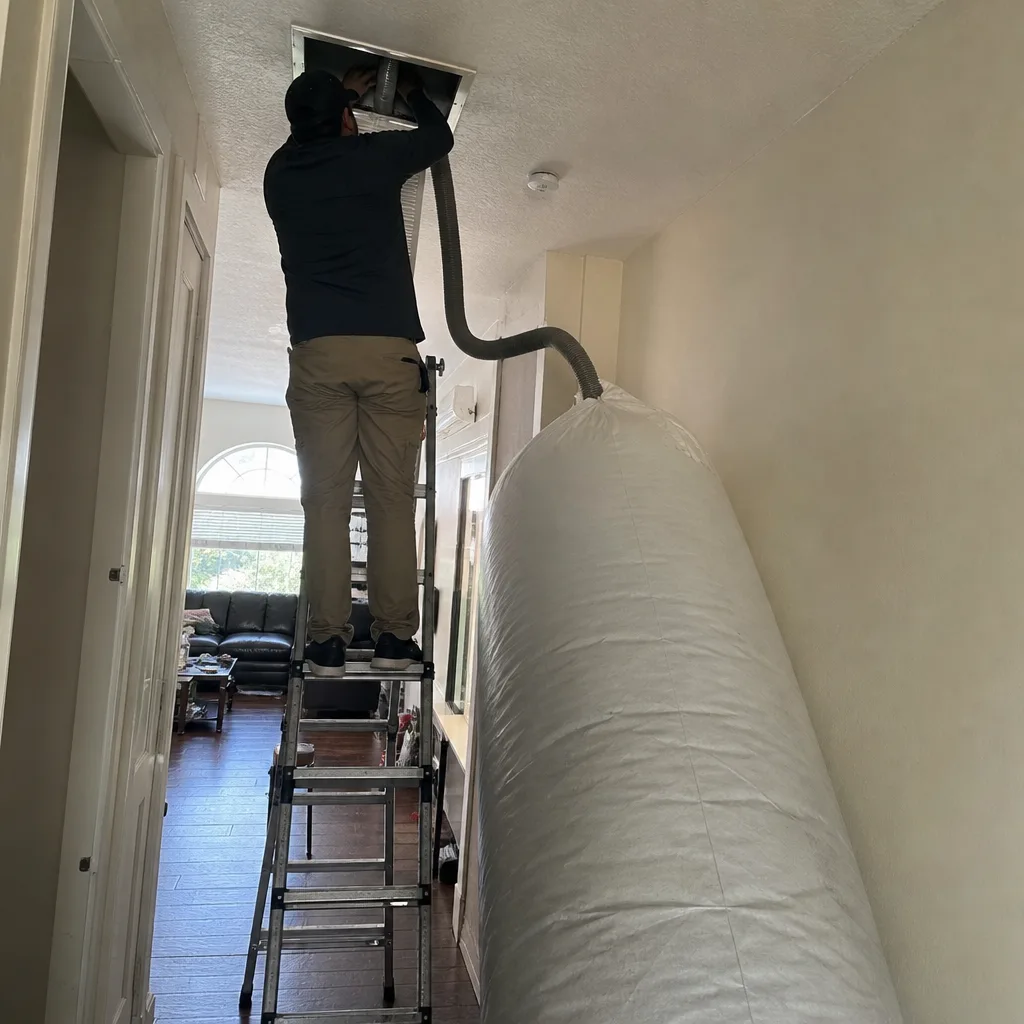
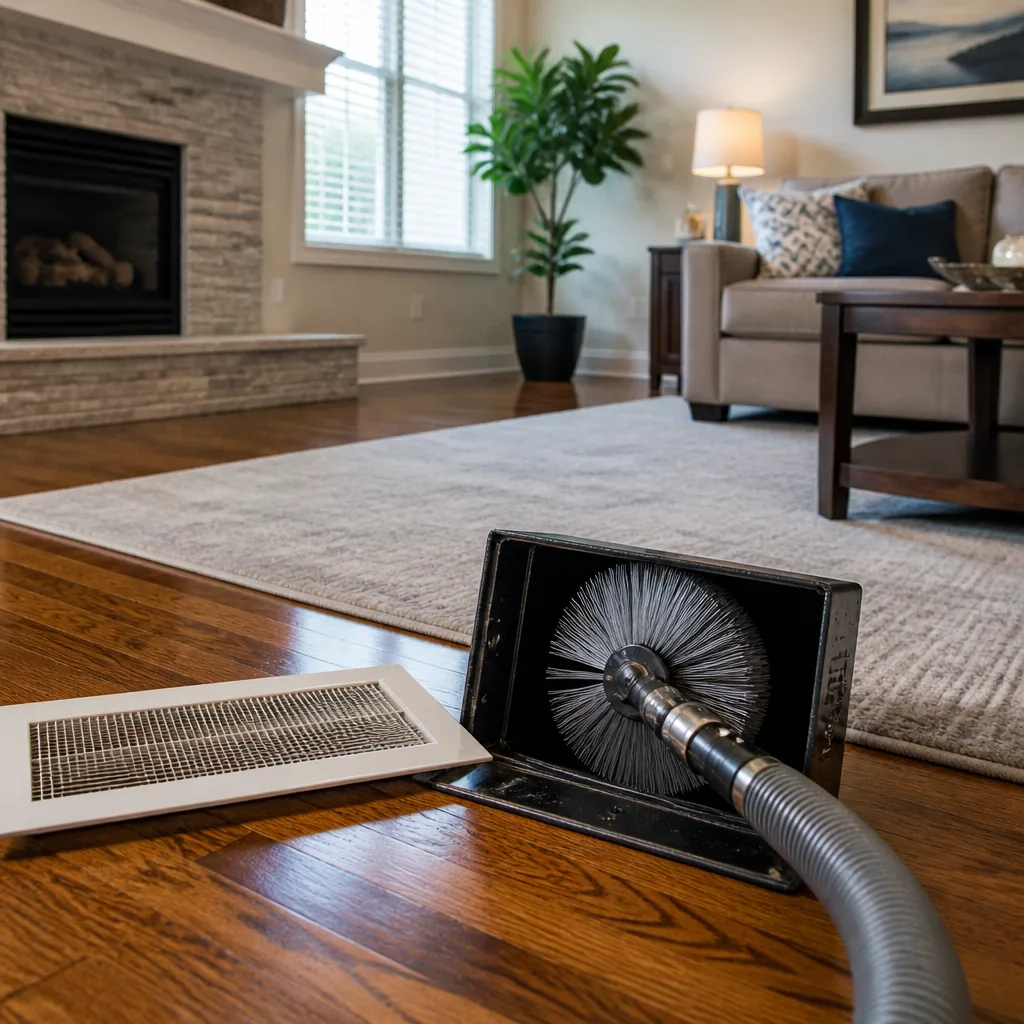 Whole-home duct cleaning
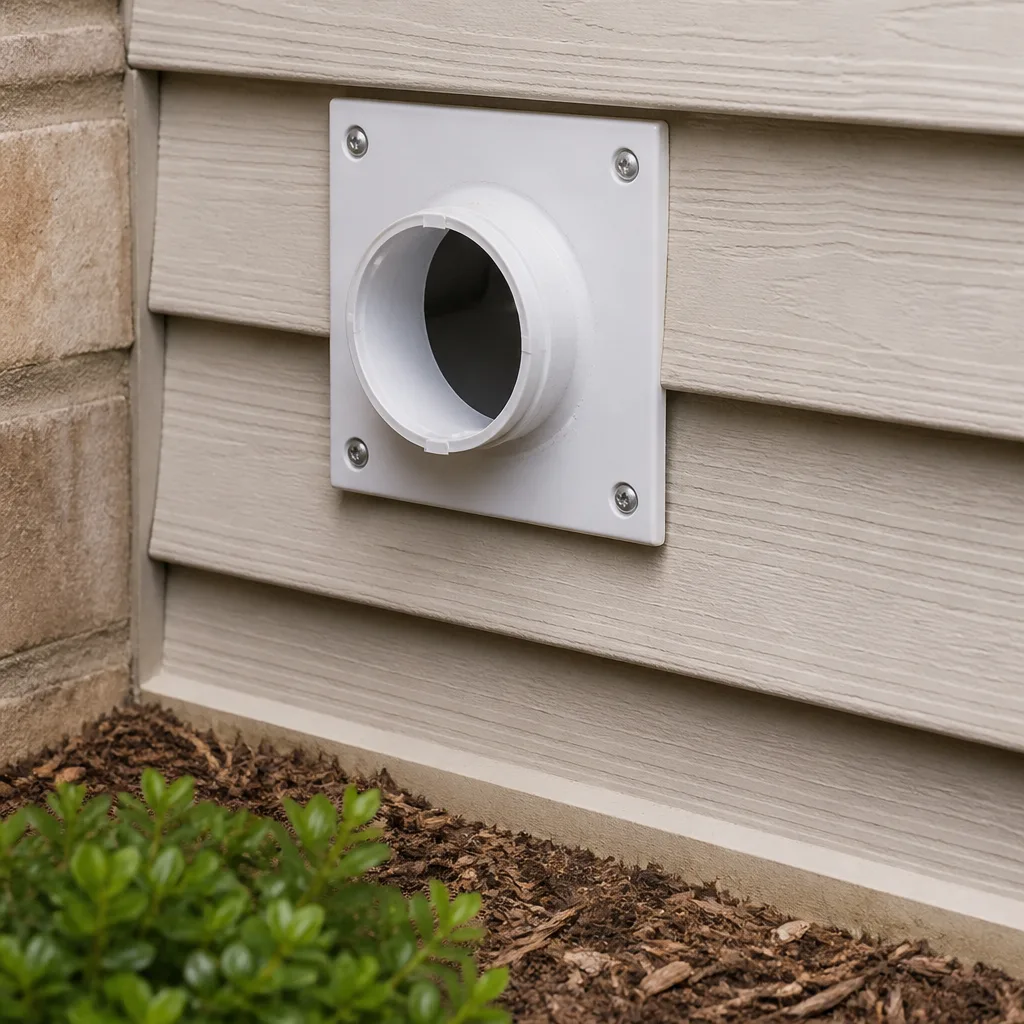 Dryer vent cleaning
 Camera inspection
 Sanitizing & deodorizing
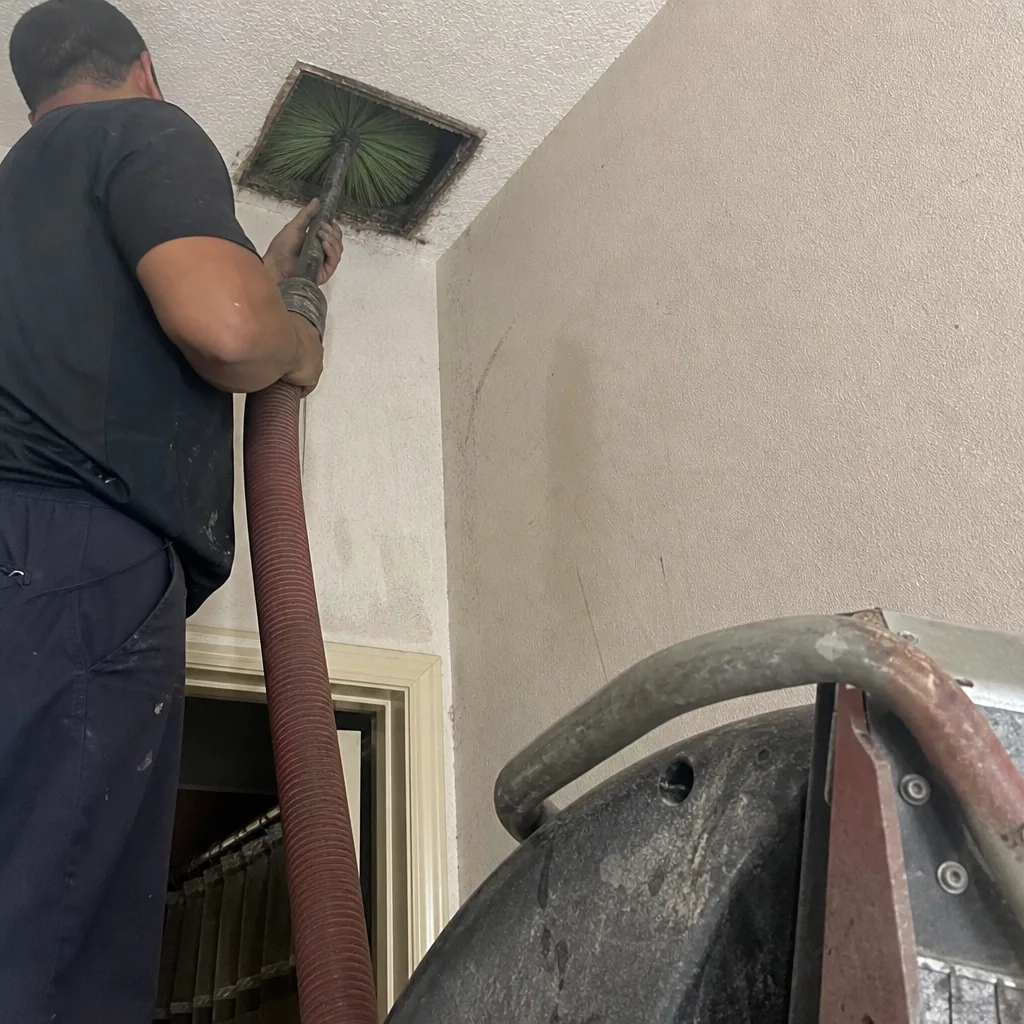
Whole-system duct and dryer vent check with before-and-after photos - you see exactly what came out of your vents
That "$99 whole-house special" is a bait ad - the real number appears once they are in your hallway, or the "clean" is a shop-vac at the register. We photograph the inside of your ducts before and after instead.
Air Duct Cleaning Troubleshooting in Pembroke Pines: Common Problems and How to Fix Them
Most homeowners in Pembroke Pines assume a musty smell after a duct cleaning means the job was done badly. Usually it’s the opposite: the ducts were cleaned, but the evaporator coil – the damp, cold surface the air passes over before it ever enters the ducts – was never touched. That coil sits in the air handler, not the ductwork, and it’s where a lot of the odor, dust and moisture problems in South Florida homes actually begin. This guide teaches you to read the symptoms your air system gives you the way a technician does – smell, airflow, register pressure, room-to-room temperature – so you can tell the difference between a system that needs cleaning and one that needs sealing or repair. You’ll learn what each symptom points to, what a real fix looks like, and when calling someone is the smarter move than guessing.
Quick Answer
Air duct problems in Pembroke Pines usually fall into three categories: cleanliness (dust and debris buildup), integrity (collapsed flex duct, disconnected joints, torn insulation), and balance (rooms that are too hot or cold regardless of how clean the ducts are). Musty, sweet, persistent smells typically signal moisture or microbial growth on the coil or in damp insulation; sharp dust smells that fade after the first few minutes of runtime usually mean settled dust in the ducts or on the blower. A duct cleaning fixes the first and third; a duct repair fixes the second. Diagnosing which one you have before you book saves you from paying for work that won’t solve the problem.
Styles & brands we work with
- Whole-home duct cleaning
- Dryer vent cleaning
- Camera inspection
- Sanitizing & deodorizing
Table of Contents
- Reading Your Air System’s Symptoms Like a Technician
- Dirty Ducts vs. Damaged Ducts: How to Tell the Difference
- What South Florida Humidity Does to Flex Duct Insulation
- Why Some Rooms in Your Pembroke Pines Home Never Get Comfortable
- Mold Smell vs. Dust Smell: What Each One Tells You
- The Coil Problem Nobody Talks About
- Clean, Repair, or Replace: Choosing the Right Next Step
- Dryer Vent Problems That Look Like Duct Problems
Reading Your Air System’s Symptoms Like a Technician
A technician walks into a house and doesn’t start with a vacuum. They start with their senses: what does the air smell like on first run, how strong is the airflow at the furthest register, does one room feel humid when the rest are dry. You can do the same three checks yourself before you call anyone, and the results will tell you roughly which category of problem you’re dealing with.
Here’s the sequence we use, and you can follow it in about ten minutes:
- Smell test on first run. Turn the system off for a few hours, then turn it on and stand near a supply register. A sharp, dusty, “hot electronics” smell that fades within a few minutes is settled dust on the blower wheel or in the ducts. A sweet, earthy, wet-cardboard smell that lingers or gets stronger as the system runs points to moisture on the evaporator coil, in the drain pan, or inside saturated duct insulation.
- Airflow feel at the furthest register. Hold your hand at the register furthest from the air handler. Strong, steady flow suggests the ducts are open and delivering. Weak or inconsistent flow – especially if it pulses or drops off – suggests a disconnected joint, a crushed section of flex duct, or a damper stuck closed.
- Pressure and temperature check across rooms. A room that’s consistently 4 to 6 degrees off from the rest of the house, regardless of whether the ducts were cleaned recently, is almost never a dirt problem. It’s a balance or sealing problem. A room that’s off only after long idle periods and catches up when the system runs a while is more often a duct cleanliness or blower issue.
These three checks alone will point you toward cleaning, repair, or balancing. In Pembroke Pines, where the air conditioner runs most of the year, the system never really gets a break, which means small duct problems have a lot of runtime to show themselves. That’s good news for diagnosis – the symptoms are usually loud by the time you notice them.
Dirty Ducts vs. Damaged Ducts: How to Tell the Difference
A dirty duct problem is uniform: every register is a little weaker than it should be, every room has a light dust film, the smell is consistent. A duct integrity problem is local: one register is dramatically weaker, one room is noticeably worse, and the rest of the house may be perfectly fine. That difference is the single most useful diagnostic clue you have.
Duct integrity failures we see most often in this part of Florida:
- Collapsed flex duct. Flexible ductwork runs through attics and crawl spaces where heat and time soften the inner liner. A run that sags or kinks loses most of its cross-section and starves the room at its end.
- Disconnected joints. Where a flex run connects to a metal trunk or a register boot, the tape or mastic holding it can fail. The system then dumps cooled air into the attic instead of your bedroom – you pay to cool the attic and the room stays warm.
- Torn outer insulation. The inner liner can be intact while the outer vapor barrier is ripped or degraded. That’s when condensation forms inside the insulation and stays there.
- Register boots not sealed to drywall. A small gap around the boot lets attic air – hot and humid – get pulled into the supply stream.
Here’s the practical test: if a full professional cleaning leaves one room still weak while the others improve, the problem was never dirt. It was integrity. Cleaning cannot fix a crushed duct or a disconnected joint – only repair can. That’s why we offer air duct cleaning and repair as separate services: they solve different problems, and a company that only cleans will tell you cleaning is the answer to both.
What South Florida Humidity Does to Flex Duct Insulation
Pembroke Pines sits in a climate where relative humidity stays high most of the year. That matters for ductwork in a way it doesn’t in drier parts of the country. Flexible duct insulation works by trapping a layer of still air around the inner liner. When the outer vapor barrier is compromised – a nick from a raccoon, a tear from attic work, a joint wrapped poorly – humid attic air migrates into that insulation layer and can’t easily escape. The result is insulation that behaves like a damp sponge.
Two things follow from that, and both are worth knowing:
- Cooled air passing through a wet duct warms up faster than it should. The room at the end of that run never reaches setpoint, even with the system running hard.
- Damp insulation is where the smell starts. It doesn’t always smell immediately. It tends to show up as a musty note that’s worse in the first minutes of runtime and then settles into a low background odor that you notice only when you walk into the house from outside.
You can spot moisture intrusion without pulling the ductwork apart in most cases. Look at the outer jacket along any run you can reach. Wrinkled or sagging insulation, sagging runs, and any place where the jacket feels soft or heavy rather than dry and springy are warning signs. Feel the register boot where it meets the ceiling – if it’s cool and clammy to the touch while the system is running, moisture is likely present somewhere upstream.
This is the reason we use Abatement Technologies filtration equipment on every job. In a humid climate, running a cleaning without negative-air containment and high-efficiency filtration means you’re just moving mold spores and dust from the ducts into the living space. Containing it at the source is standard practice in commercial and abatement work; it should be standard in your home too.
Why Some Rooms in Your Pembroke Pines Home Never Get Comfortable
Uneven room temperatures are the single most misdiagnosed complaint in this trade. Homeowners book a duct cleaning expecting a bedroom to finally cool down, and it doesn’t, because the problem was never contamination. It was balance: the amount of air being delivered to each room, not the cleanliness of the ducts delivering it.
The difference between a balance problem and a dirt problem comes down to timing and pattern:
- Balance or sealing problem: the room is off by a consistent number of degrees all the time, and that number doesn’t change when the system has been cleaned. The register airflow feels steady but weak.
- Dirt problem: the room cools slowly when the system first starts and improves over the run cycle. The airflow feels weak at first and firms up. The register often has a visible dust film.
- Duct integrity problem: the room is dramatically off while neighboring rooms are fine. The register airflow feels weak or pulsing and doesn’t improve on longer runs.
The most common one we see in Pembroke Pines is the first. Long, hot, humid days mean the system runs most of the day, and rooms on longer duct runs or with undersized returns never catch up. That’s fixable, but the fix is identifying whether the run needs a damper rebalance, a return-path improvement, or a repair on a compromised section – not a cleaning.
Mold Smell vs. Dust Smell: What Each One Tells You
This is where homeowners most often guess wrong, and it’s where a fifteen-minute observation saves you a service call. Mold and dust smell genuinely different, and the difference points to very different fixes.
The dust smell: sharp, dry, slightly metallic or like hot dust on a heat register. It shows up when the system first comes on after sitting idle, then fades within five to ten minutes as the airflow cycles. That pattern means settled dust on the blower wheel, on the inside of the ducts, or on the evaporator coil fins. A full system cleaning and a coil clean resolve it.
The mold smell: sweet, earthy, like wet cardboard or a damp basement. It doesn’t fade after the first run – it may get stronger, because airflow across a wet coil or wet insulation releases more of it as the system runs. It also tends to be worse in specific rooms or zones rather than uniform throughout the house. That pattern means moisture somewhere in the system, and it needs to be found and dried, not just cleaned.
A third smell worth learning to recognize: a rubbery or metallic smell at a specific register is often a sign of a failing run or disconnected joint pulling attic air into the supply stream. Attic air in this climate carries its own odors from insulation and whatever’s stored up there.
If the smell points to mold, cleaning alone won’t fix it. The coil, the drain pan and the insulation in the affected runs have to be inspected, and any compromised flex duct replaced. This is where a duct repair capability matters – we use Rotobrush rotary-brush systems to clean, but cleaning is only worth doing once the moisture source is addressed.
The Coil Problem Nobody Talks About
This is the heart of the musty smell after cleaning complaint, and it’s the reason we’ve written this guide the way we have. When air leaves your return registers, it passes over the evaporator coil inside the air handler. The coil is cold and wet – that’s how it dehumidifies – and it collects dust, pollen and whatever else the return air carries. Over time that layer of material becomes the food source for whatever grows in a damp, dark environment.
Duct cleaning removes what’s in the ducts. It does not, by itself, touch the coil, the drain pan, or the plenum between them. If your smell is coil-side, a duct-only cleaning will make the ducts spotless and leave the musty smell exactly where it was.
What a coil-side service actually involves:
- Access the coil. On most residential air handlers, the coil is behind a panel; on some it’s a dedicated coil door.
- Inspect fins and drain pan. Fin damage is common from previous attempts; the drain pan is inspected for standing water and biological growth.
- Clean with a coil-safe product. Not the same chemistry that cleans sheet metal ductwork.
- Verify the drain is flowing. A clogged drain line keeps the pan wet and the smell returns. This step is not optional.
- Confirm airflow improves across the coil. A dirty coil starves the whole system, so cleaning it typically restores some airflow to every register.
If the coil-side work is being done alongside a full duct cleaning, the sequence matters: clean the ducts first, then the coil, then verify drain flow. Doing it out of order means recontaminating the coil. On premium air systems – Honeywell and Aprilaire setups in particular – technicians have to work around delicate sensors and filtration stages, which is why we name those systems when walking a homeowner through the plan.
Clean, Repair, or Replace: Choosing the Right Next Step
Once you’ve diagnosed the symptom, the next question is what the fix actually is. Here’s how we frame it.
Cleaning is the right step when:
- The dust smell fades after the first run, every register is uniformly weaker than it should be, and the visual inspection of the ducts shows accumulated dust but no visible damage.
- The system is older and no one remembers the last cleaning, and there’s a light dust film on the registers in every room.
- The home was recently renovated – drywall dust and construction debris sit in ductwork for years without a proper clean.
Repair is the right step when:
- Airflow is dramatically uneven and cleaning didn’t resolve it.
- The flex duct insulation is visibly torn, sagging, or saturated.
- A specific room never recovers its temperature, or the smell is concentrated in one zone.
- A register boot is loose or unseated from the drywall.
Replacement (of a duct run, not the whole system) is the right step when:
- A run of flex duct has collapsed internally – the liner itself is kinked or crushed beyond use.
- Insulation has been wet long enough that the liner is degraded.
- The run is undersized for the room it serves and needs a different diameter instead of a repair.
Some homes need two of these at once – a cleaning plus a repair on the runs that failed – and some genuinely only need sealing. We recommend air duct cleaning first when the problem is uniform, and duct repair first when the problem is localized. Neither is a substitute for the other.
Dryer Vent Problems That Look Like Duct Problems
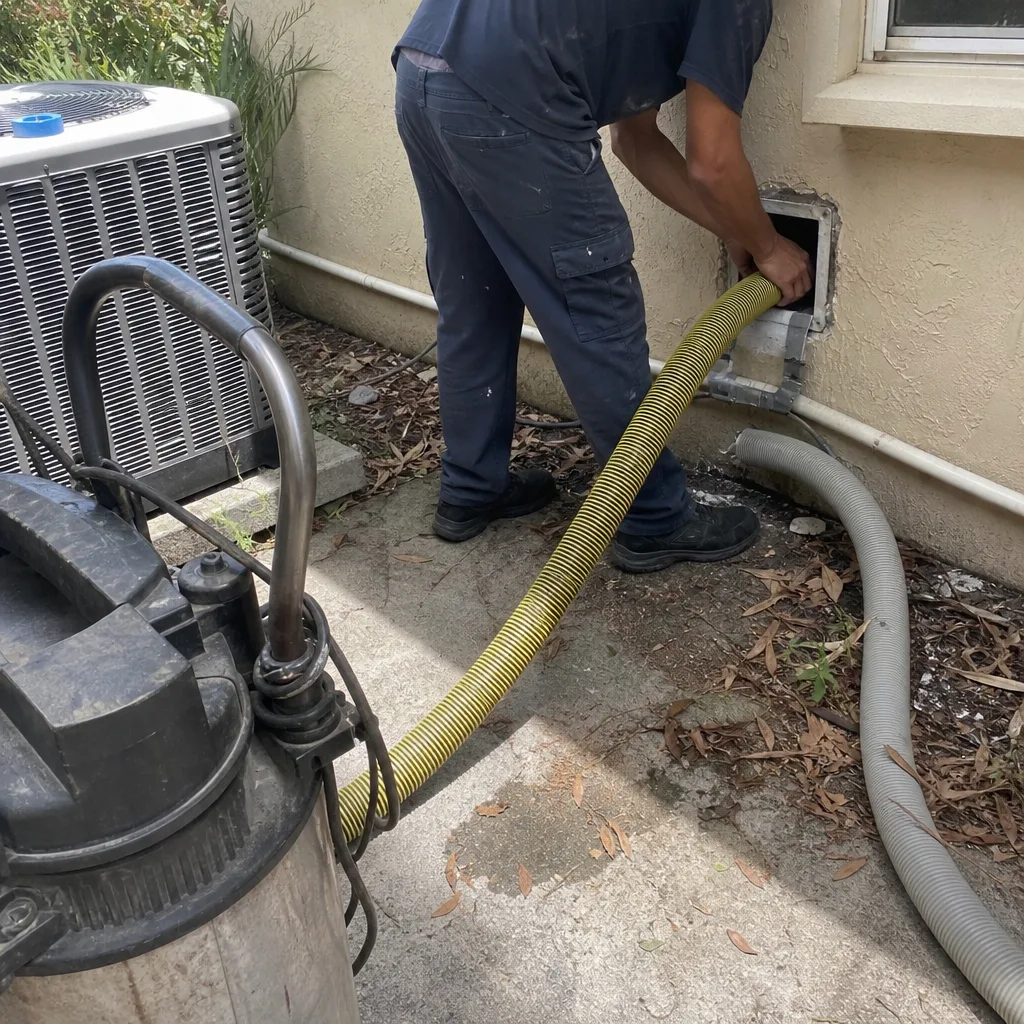
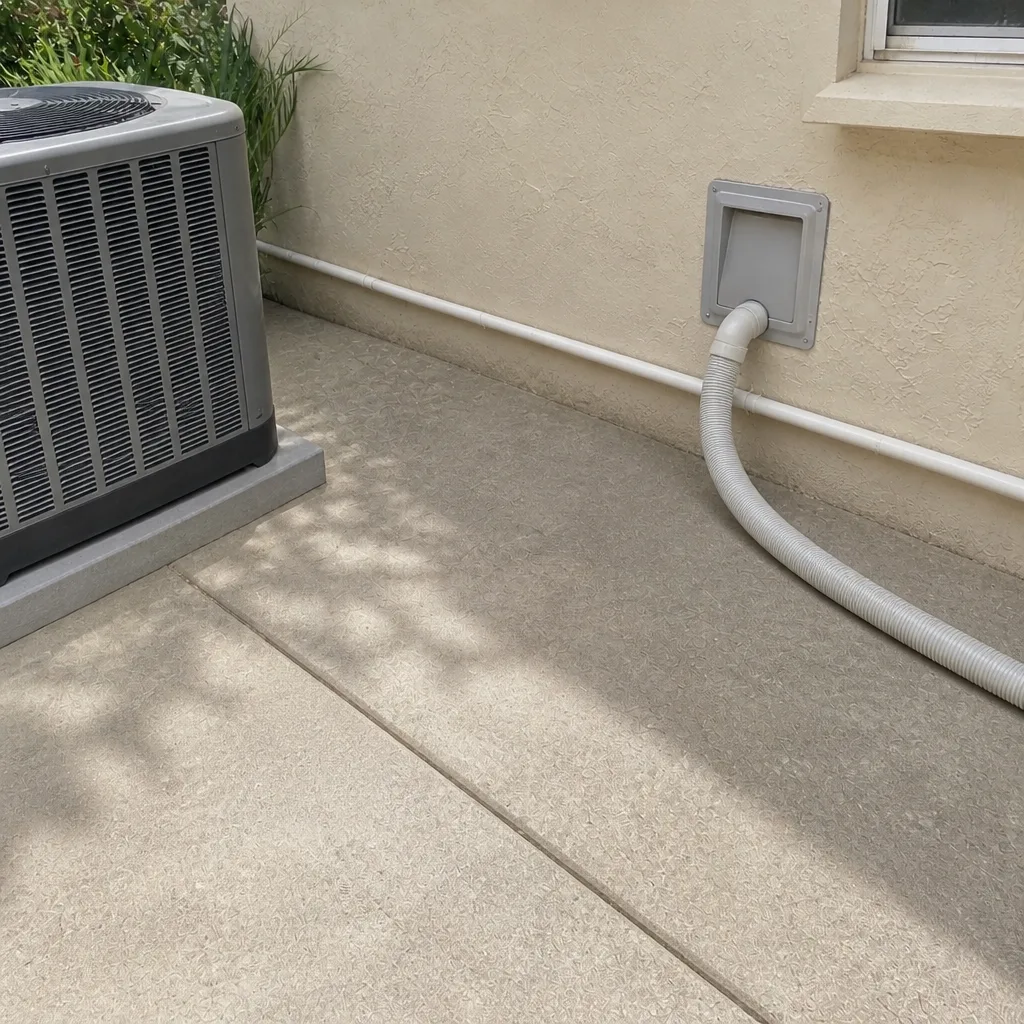
One troubleshooting call-out to close on: if the laundry room is unusually humid, the dryer takes more than one cycle to dry a load, or the outside vent flap doesn’t lift strongly when the dryer runs, that’s a dryer vent issue – not a home air duct issue. The symptoms overlap because both problems put moisture and lint into a duct run, but the fix is different. A clogged dryer vent is a documented fire risk and needs its own service, which is why dryer vent cleaning is a standalone service rather than something tacked onto a duct cleaning.
You can check the outside vent flap yourself. Turn the dryer on and watch the flap outside. It should lift freely and stay open while the dryer runs. If it stays shut or only flutters, there’s a restriction inside the run that no amount of duct cleaning on the HVAC side will address.
Common Mistakes to Avoid
- Booking a duct cleaning for an even-temperature complaint. If one room is permanently 5 degrees off, cleaning won’t fix it. Diagnose the run first or you’ll pay for work that doesn’t solve the problem.
- Assuming the smell is a duct issue when it’s coil-side. The most common post-cleaning complaint we hear is a smell that “came back.” It never left – it was in the coil the whole time.
- Skipping the attic inspection. In Florida, flex duct damage happens in the attic where you can’t see it from the living room. A technician who never goes into the attic is guessing.
- Hiring a cleaning-only company for a repair issue. If the problem is a collapsed run or a torn jacket, cleaning is wasted money – you need repair capability.
- Ignoring a musty smell as “just Florida.” Humidity is normal; a sweet, earthy smell inside the ducts is not. It means moisture is somewhere it shouldn’t be.
- Treating a dryer vent symptom as a duct symptom. Dryer vents clog at a different rate and require their own cleaning; venting lint into an HVAC question wastes time.
- Using a shop-vac to “test” the problem. Consumer vacuums don’t have the airflow or HEPA containment to clean ductwork, and the exercise gives a false sense of what the ducts actually look like inside.
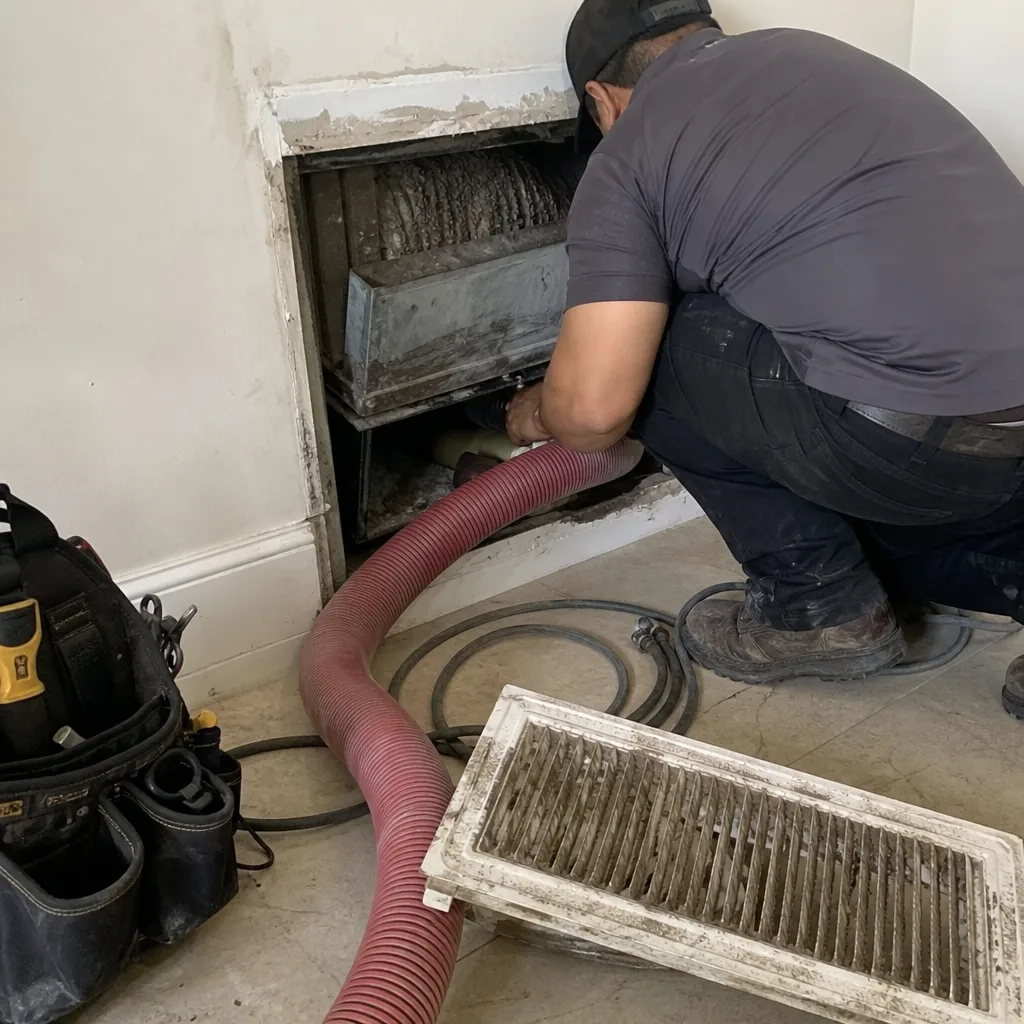
See the difference
 Before
 After
 Before
 After
 Before
 After
When to Call a Professional
Call a professional when a smell persists after a first run, when one room is dramatically cooler or warmer than the rest and stays that way, when you can see sagging or torn flex duct in the attic, when the registers show a heavy dust film across every room, or when the outside dryer vent flap doesn’t lift freely. Those five signs point to specific diagnoses that need a real inspection, not a guess from a phone call.
What you should expect from a professional visit: a walkthrough of the system, an attic inspection, a conversation about what’s actually wrong before any work starts, and a written estimate that sets the price per job before the work begins. Not per-vent pricing. Not a coupon that becomes a bigger invoice. One flat price per system, agreed in advance.
Ashford Air Duct Cleaning offers free estimates in Pembroke Pines – call (855) 508-8964 to schedule one. We answer 24/7. Fast dispatch from 7am to 7pm, Sunday through Friday. Our technicians have up to 15 years of experience, and they’ll walk you through what they find before touching a single duct.
Frequently Asked Questions
Because the evaporator coil usually wasn’t cleaned. The coil sits in the air handler, not the ducts, and it’s a wet, dark surface that collects dust and organic matter. A duct-only cleaning leaves it untouched. The fix is a coil inspection and cleaning, plus a drain pan check, not a return visit to re-clean the ducts.
Check whether the problem is uniform or localized. If every register is slightly weak and there’s a light dust film everywhere, it’s a cleaning. If one room is dramatically cooler or warmer, or one register pulses or drops airflow, it’s a repair issue – usually a collapsed flex run or disconnected joint in the attic. The two are different services and neither replaces the other.
Yes. When the outer vapor barrier on a flex run is compromised, humid attic air migrates into the insulation and stays there. That wet insulation warms the cooled air passing through, which means the room at the end of that run never reaches setpoint. It also becomes a moisture source for musty smells. Any flex run with a compromised jacket needs to be replaced, not just cleaned.
Almost always because of a duct balancing or integrity problem, not dirt. The most common causes are a collapsed flex run, an undersized return path, or a damper that needs adjustment. A duct cleaning won’t fix it if the problem is airflow distribution. The diagnostic check is to feel the register airflow – steady but weak suggests balance; pulsing or dramatically weak suggests a disconnected or crushed run.
Dust smells sharp and dry and fades within a few minutes of the system running. Mold smells sweet, earthy or like wet cardboard, and it doesn’t fade – it may get stronger as the system runs because airflow releases more of it. Dust points to a cleaning; mold points to a moisture problem on the coil or in wet insulation, which needs to be found and dried before cleaning will solve anything.
Only if the dryer vent symptoms are present – the outside flap doesn’t lift, loads take more than one cycle, or the laundry room runs humid. A clogged dryer vent is a documented fire risk and needs its own service, separate from HVAC duct cleaning. It’s worth a two-minute check of the outside flap before you assume the ducts are the issue.
The Bottom Line
Most air duct problems in Pembroke Pines point to one of three diagnoses: contamination, integrity failure, or balance. The three checks that reveal which one you have are the first-run smell test, the airflow feel at the furthest register, and the room-to-room temperature pattern. A uniform dust smell across every register points to cleaning; a musty smell that doesn’t fade points to the coil or wet insulation; a single room that never catches up points to a repair or balancing problem. Cleaning, repair and dryer vent cleaning are three separate services because they solve three separate problems. If you want a professional diagnosis, that’s what a free estimate is for. Call (855) 508-8964 and we’ll walk the system with you. We answer 24/7. Fast dispatch from 7am to 7pm, Sunday through Friday.
Written by the team at Ashford Air Duct Cleaning.